
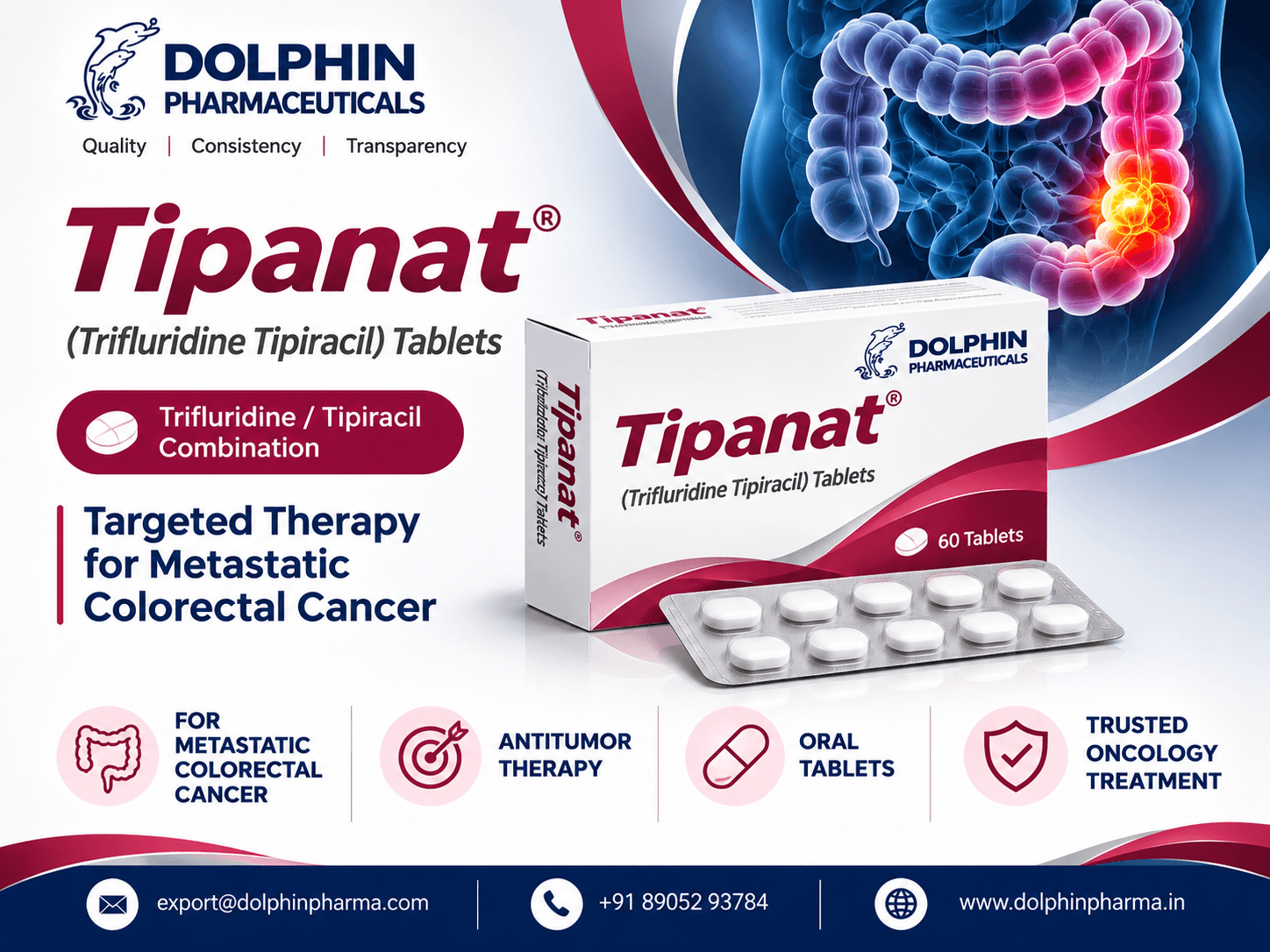
Tipanat (Trifluridine + Tipiracil) Tablets
Subtitle:
Introduction
The demand for specialised oncology medicines continues to grow as hospitals, pharmaceutical distributors, importers, and healthcare procurement organisations work to improve access to cancer treatments. International buyers sourcing these products need to evaluate product specifications, manufacturer information, quality documentation, regulatory requirements, and supply-chain arrangements.
Tipanat (Trifluridine + Tipiracil) Tablets is an oncology medicine containing two active ingredients: trifluridine and tipiracil. This combination is used in specific treatment settings for certain patients with advanced colorectal cancer and, in some markets, other approved cancer indications. It is a prescription medicine that requires specialist supervision.
India is an established pharmaceutical sourcing market for international buyers. However, purchasing an oncology medicine requires more than comparing prices. Buyers should verify the actual manufacturer, product presentation, availability, documentation, and import eligibility in the destination country before confirming an order.
Dolphin Pharmaceuticals supports international pharmaceutical buyers with product enquiries and discussions about pharmaceutical sourcing and export coordination from India.
1. What Is Tipanat (Trifluridine + Tipiracil)?
Tipanat is a product name associated with tablets containing trifluridine and tipiracil. The combination brings together two ingredients that work through complementary mechanisms.
- Trifluridine is a nucleoside analogue that can be incorporated into DNA and interfere with cancer-cell growth.
- Tipiracil inhibits an enzyme responsible for breaking down trifluridine, helping maintain its concentration in the body.
Together, these ingredients support the medicine's anticancer activity.
Product overview
- Brand name: Tipanat
- Active ingredients: Trifluridine + Tipiracil
- Dosage form: Tablet
- Therapeutic category: Oncology medicine
- Drug class: Antimetabolite-based combination
- Route of administration: Oral
- Treatment area: Specific advanced or metastatic cancer indications
The exact strength, ingredient ratio, pack size, manufacturer, and product availability should be confirmed with the supplier before procurement. Trifluridine + Tipiracil products may be available in different tablet strengths, so buyers should specify the required presentation clearly.
2. Understanding the Medical Use of Trifluridine + Tipiracil
Trifluridine + Tipiracil is used in selected treatment settings for certain patients with advanced or metastatic colorectal cancer, particularly where previous treatment options have been unsuccessful or are no longer suitable.
Depending on the approved product information and destination-country regulations, it may also have other approved oncology indications.
Treatment decisions depend on:
- The patient's cancer diagnosis and disease stage
- Previous treatments and clinical response
- The patient's general health and treatment suitability
- Relevant laboratory results and safety monitoring
- Applicable prescribing information and clinical guidelines
This medicine is prescribed and monitored by qualified oncology professionals. Buyers should not interpret general product information as an individual treatment recommendation.
Important safety considerations
Trifluridine + Tipiracil can cause serious adverse effects, including bone marrow suppression, which may lead to reduced white blood cells, red blood cells, and platelets. Healthcare professionals may require regular blood-count monitoring during treatment.
The product also has specific precautions relating to pregnancy, breastfeeding, and potential interactions. The approved prescribing information should be consulted for complete safety details.
3. Why International Buyers Consider India for Oncology Medicines
India has an established pharmaceutical industry and participates in international medicine supply chains. Global pharmaceutical buyers may consider Indian suppliers when evaluating sourcing options for oncology products.
Important sourcing considerations include:
Pharmaceutical sourcing experience
Suppliers familiar with pharmaceutical exports can help buyers understand product enquiries, commercial requirements, documentation expectations, and shipment coordination.
Product sourcing options
International distributors may seek suppliers who can discuss different pharmaceutical categories, including oncology medicines, subject to actual availability and applicable permissions.
Documentation coordination
Pharmaceutical export transactions involve commercial, product-related, and shipping documents. Buyers should confirm which documents are available for the specific product and shipment.
Communication and order coordination
Clear communication about product specifications, quantities, pricing, lead times, and delivery responsibilities can support a more organised procurement process.
Destination-market compliance
The importing country's regulatory framework determines whether a medicine can be imported, marketed, or distributed. Buyers should verify the applicable requirements before placing an order.
4. What Global Buyers Should Check Before Purchasing Tipanat Tablets
Selecting an oncology medicine supplier requires more than comparing quotations. Buyers should carefully evaluate the product, manufacturer, documentation, and regulatory status.
Consider these essential points:
1. Active ingredients and strength
Confirm that the product contains both trifluridine and tipiracil. Verify the strength of each ingredient per tablet and ensure that the proposed presentation matches the purchase requirement.
2. Brand and manufacturer details
Request the actual manufacturer's name, product information, and relevant supporting documentation. Do not assume that the supplier is also the manufacturer.
3. Product registration and import eligibility
Check whether the proposed product and manufacturer meet the requirements of the destination country's regulatory authority.
4. Batch and expiry information
Review the batch number, manufacturing date, expiry date, and remaining shelf life before shipment.
5. Quality documentation
Ask about relevant quality documents, including a batch-specific Certificate of Analysis where available and applicable.
6. Packaging and labelling
Confirm the pack size, tablet strength, packaging configuration, product labelling, and any local language or regulatory requirements.
7. Storage and transportation
Review the manufacturer's approved storage instructions and confirm that the proposed shipping arrangements are suitable.
8. Commercial terms
Clarify the minimum order quantity, pricing, payment terms, lead time, shipping method, and delivery responsibilities.
5. Quality Considerations for Trifluridine + Tipiracil Tablets
Quality assurance is essential when sourcing oncology medicines. Buyers should establish that the supplied product matches the agreed specifications and is supported by relevant documentation.
Important quality considerations include:
- Product identity: Verify both active ingredients and their respective strengths.
- Manufacturer information: Confirm the actual manufacturing source and applicable authorisations.
- Batch documentation: Request relevant batch-specific quality records.
- Packaging integrity: Check that the packaging is intact and appropriate for transportation.
- Shelf life: Ensure the remaining shelf life meets the buyer's requirements.
- Storage conditions: Follow the manufacturer's stated storage and handling instructions.
- Product traceability: Maintain batch identification and relevant supply records.
- Product presentation: Confirm that the tablet strength and pack configuration match the purchase order.
A general supplier quality statement should not replace a review of the actual product and batch documentation.
6. Export Documentation for Tipanat Tablets
Accurate documentation is an important part of international pharmaceutical trade. The exact requirements depend on the product, exporter, manufacturer, shipment, and importing-country regulations.
Commonly relevant documents may include:
Commercial Invoice
The commercial invoice records transaction details, including product description, quantity, unit price, total value, and buyer and seller information.
Packing List
The packing list provides shipment details such as the number of packages, packaging configuration, gross weight, and net weight.
Certificate of Analysis
A Certificate of Analysis (CoA), where available and applicable, provides batch-specific test results against relevant quality specifications.
Certificate of Origin
A Certificate of Origin identifies the country of origin of the goods when required by the importing country or buyer.
Shipping and customs documents
Depending on the shipment, documents may include a shipping bill, airway bill or bill of lading, and other customs-related records.
Regulatory documents
Additional documents may be required depending on the product category and destination-country requirements. These may include product registration evidence, import permits, manufacturing-related documents, or other certificates requested by the relevant authorities.
Important: Documentation requirements are not identical in every country. Importers should confirm the exact requirements with their local regulatory authority and customs representative before shipment.
7. Regulatory Considerations for International Pharmaceutical Importers
Trifluridine + Tipiracil is a prescription oncology medicine. Buyers should carefully review the regulations governing its importation and distribution in their intended market.
Before confirming an order, importers should check:
- Whether the product is permitted for import in the destination country.
- Whether product registration or special import authorisation is required.
- Whether the proposed brand and manufacturer are acceptable.
- Whether the importer holds the necessary pharmaceutical licences.
- Whether the product's approved indications match local requirements.
- Whether local labelling and language requirements apply.
- Whether specific certificates or supporting documents are required.
- Whether additional customs or distribution procedures apply.
Requirements vary between markets and may change over time. Buyers should obtain confirmation from the relevant regulatory authority before arranging a commercial shipment.
8. Packaging, Storage, and Transportation
Appropriate packaging and transportation arrangements help protect pharmaceutical products throughout the supply chain.
For Tipanat tablets, buyers should review the manufacturer's approved packaging and storage instructions.
Key considerations include:
- Confirming the approved tablet strength and pack size.
- Checking that product labels are clear and legible.
- Reviewing batch and expiry details.
- Protecting the shipment against damage and unsuitable environmental conditions.
- Following the manufacturer's stated storage requirements.
- Confirming that the shipping method is appropriate for the product.
- Meeting the destination country's packaging and labelling requirements.
The supplier and buyer should agree on shipment responsibilities before dispatch. Any special handling requirements should be communicated clearly to the logistics provider.
9. How to Choose a Reliable Trifluridine + Tipiracil Supplier in India
Choosing a suitable pharmaceutical supplier is an important part of international procurement. Buyers should evaluate transparency, documentation, product information, and communication before placing an order.
Use the following checklist:
- Does the supplier provide clear product specifications?
- Can the supplier identify the actual manufacturer?
- Are both active ingredients and their strengths clearly stated?
- Are relevant product and batch documents available?
- Can the supplier confirm current product availability?
- Does the supplier understand destination-country documentation requirements?
- Are commercial terms communicated clearly?
- Are lead times and shipment arrangements explained?
- Is communication consistent throughout the enquiry and order process?
Buyers should independently verify important product and regulatory claims and ensure that the proposed transaction complies with applicable laws.
10. Why Contact Dolphin Pharmaceuticals for Oncology Medicine Enquiries?
Dolphin Pharmaceuticals is an India-based pharmaceutical company serving international buyers interested in pharmaceutical sourcing and export coordination.
For enquiries about Tipanat (Trifluridine + Tipiracil) tablets, international buyers can discuss their product requirements and request information relevant to the proposed supply.
Dolphin Pharmaceuticals can assist with enquiry coordination covering:
- Product and ingredient-strength confirmation
- Brand and manufacturer information, subject to the proposed supply
- Pack size and availability enquiries
- Commercial quotation discussions
- Relevant product documentation enquiries
- Export and shipment coordination
- Destination-specific buyer requirements
Product availability, manufacturer details, documentation, and export eligibility should be confirmed for each enquiry. Any supply arrangement is subject to applicable regulatory requirements and product permissions.
11. Information Buyers Should Include in a Product Enquiry
To help a supplier respond accurately, international buyers should provide the following information:
- Required product: Tipanat (Trifluridine + Tipiracil) tablets
- Required strength: Specify the required strength of both active ingredients
- Required quantity: Expected order quantity
- Destination country: Country of import
- Buyer type: Licensed importer, distributor, hospital, or other eligible organisation
- Required documents: Documents requested by the local regulatory authority
- Target delivery schedule: Preferred shipment timeline
- Additional requirements: Pack size, labelling, registration, or other specifications
Providing these details at the beginning of the enquiry can make quotation discussions and supply coordination more efficient.
12. Frequently Asked Questions (FAQs)
Q1. What is Tipanat?
Tipanat is a product name associated with tablets containing trifluridine and tipiracil, a combination used in selected oncology treatment settings.
Q2. What are the active ingredients in Tipanat?
The active ingredients are trifluridine and tipiracil. Buyers should verify the exact strength of each ingredient on the product label and supporting manufacturer documentation.
Q3. What is Trifluridine + Tipiracil used for?
The combination is used in specific treatment settings for certain patients with advanced or metastatic colorectal cancer. Other approved indications may depend on the destination market and applicable product authorisation.
Q4. Is Trifluridine + Tipiracil an oral medicine?
Yes. It is supplied as an oral tablet formulation and must be used according to the approved prescribing information and a healthcare professional's instructions.
Q5. Can international buyers source Tipanat tablets from India?
International buyers can enquire with Indian pharmaceutical suppliers. Actual availability, manufacturer details, export eligibility, and destination-country import permissions must be confirmed before placing an order.
Q6. Which documents may be required to import Tipanat tablets?
Depending on the destination country and shipment, documents may include a commercial invoice, packing list, Certificate of Origin, Certificate of Analysis where applicable, shipping documents, and relevant regulatory authorisations.
Q7. What quality checks should buyers perform?
Buyers should verify both active ingredients and their strengths, manufacturer details, batch-specific quality documentation, packaging information, shelf life, and applicable regulatory records.
Q8. Are import requirements for Tipanat the same in every country?
No. Pharmaceutical import requirements differ by country. Buyers should check local registration, import authorisation, labelling, and documentation requirements before shipment.
Q9. How can I enquire about Tipanat from Dolphin Pharmaceuticals?
International buyers can contact Dolphin Pharmaceuticals with the required strength, quantity, destination country, and documentation requirements to discuss product details and potential supply arrangements.
Conclusion
Tipanat (Trifluridine + Tipiracil) tablets contain a combination of anticancer ingredients used in selected treatment settings for advanced or metastatic cancer. International pharmaceutical buyers considering this product should carefully evaluate its exact strength, manufacturer details, quality documentation, regulatory status, and transportation requirements.
India offers international buyers a broad pharmaceutical sourcing market. However, successful procurement depends on transparent supplier communication, appropriate product verification, and compliance with the importing country's regulations.
Dolphin Pharmaceuticals welcomes enquiries from eligible international pharmaceutical buyers seeking information about Tipanat (Trifluridine + Tipiracil) tablets and other oncology medicines. Contact the team to discuss product requirements, documentation expectations, and potential export arrangements.
My Company Name - Dolphin Pharmaceuticals
My Website - https://www.dolphinpharma.in/