Indian Oncology Medicine Exporter: Supporting Global Pharmaceutical Supply Needs
Subtitle: Discover how Dolphin Pharmaceuticals supports international pharmaceutical sourcing through oncology product enquiries, transparent communication, and a buyer-focused approach to global medicine supply.
Introduction
The demand for pharmaceutical products continues to create opportunities for international distributors, licensed importers, wholesalers, and healthcare procurement organisations. Among the many pharmaceutical categories, oncology medicines require particular attention because buyers must evaluate product specifications, manufacturer information, quality documentation, storage requirements, and destination-country regulations.
India has an established pharmaceutical industry with a broad range of medicines available through manufacturers, distributors, and export-oriented suppliers. For international buyers, selecting an Indian oncology medicine exporter is an important step towards developing a dependable pharmaceutical sourcing strategy.
However, choosing the right supplier involves more than comparing prices. Buyers need accurate product information, clear communication, transparent commercial terms, and confirmation that the requested products can be supplied legally to their intended markets.
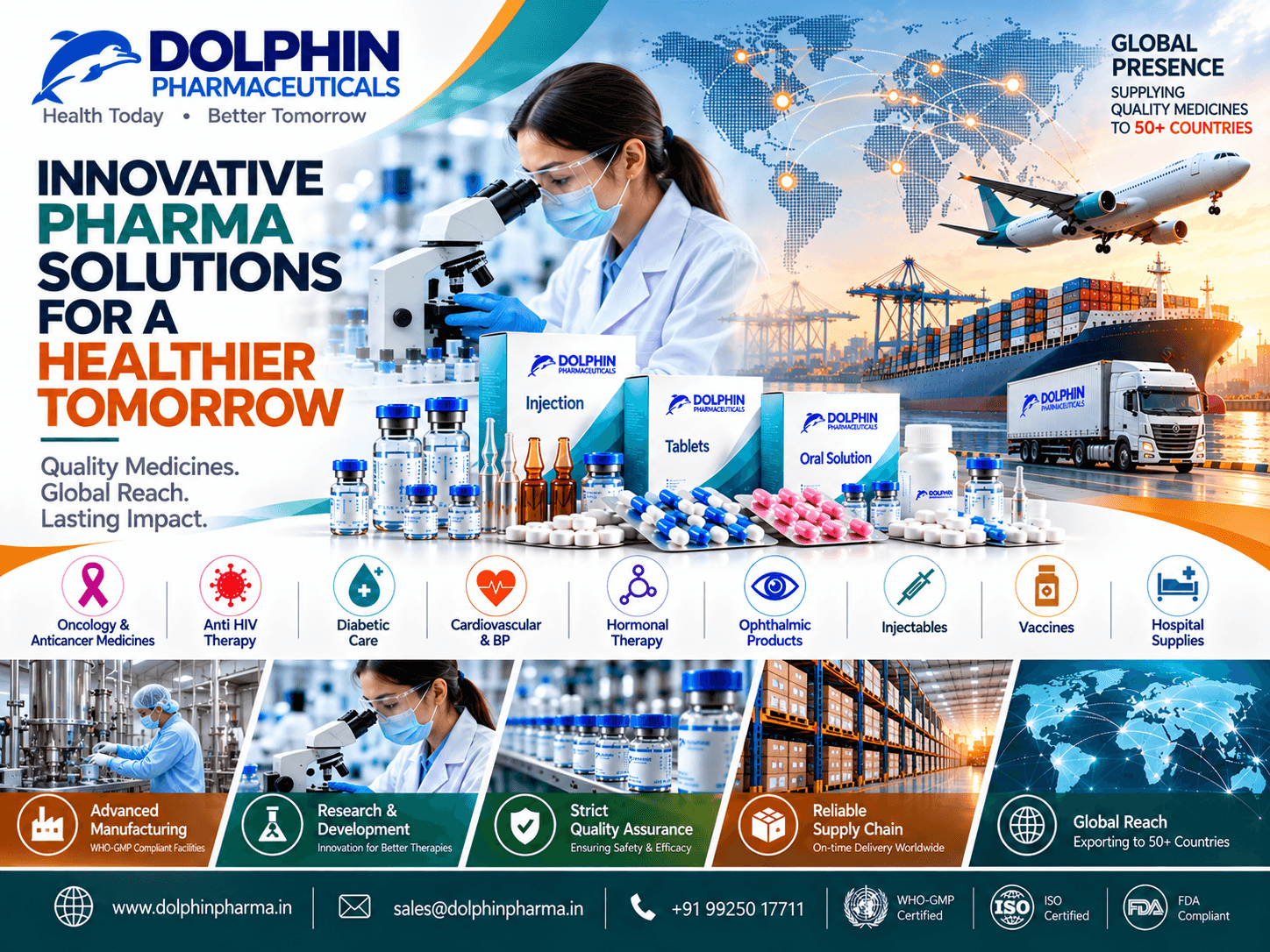
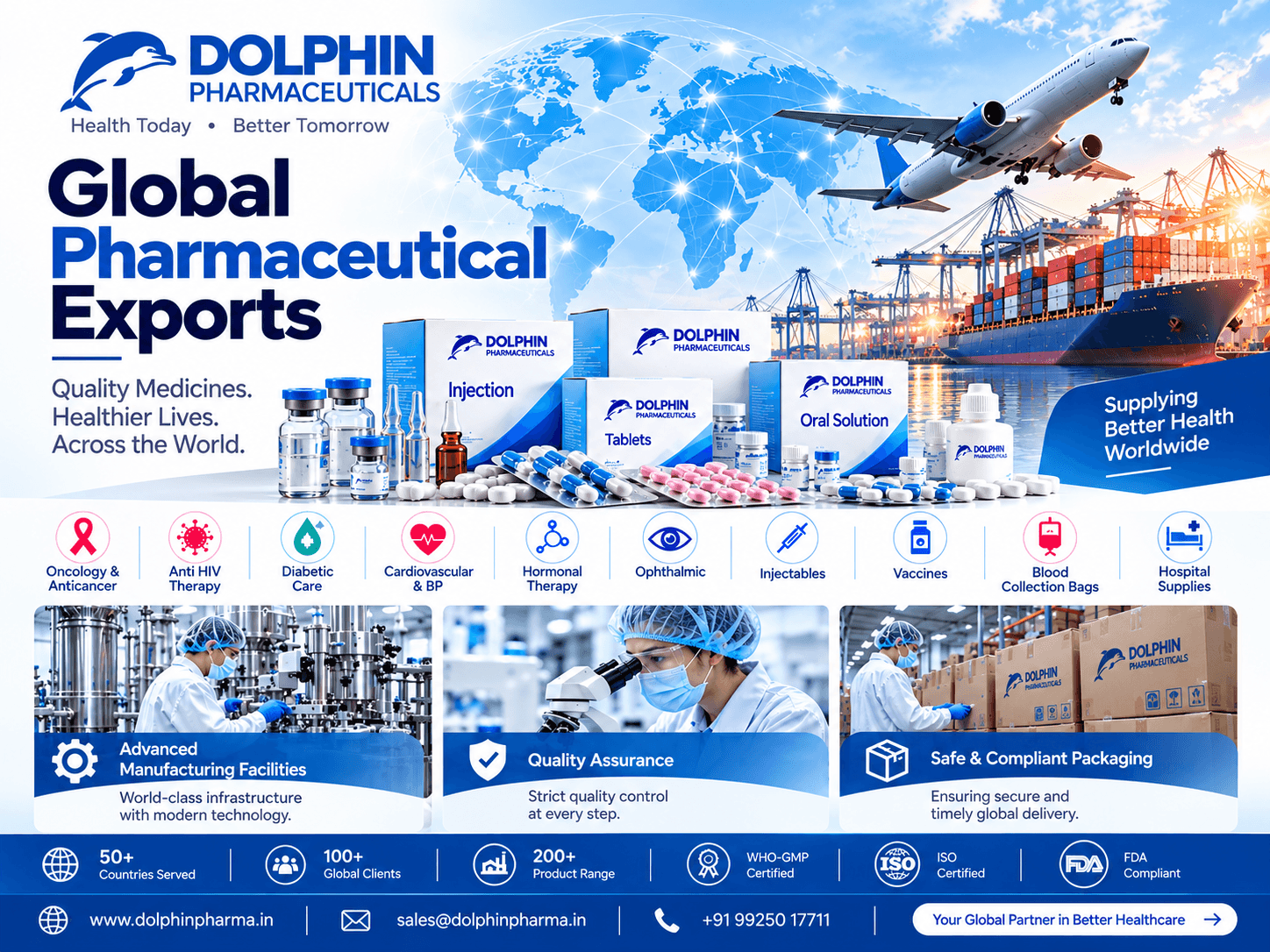
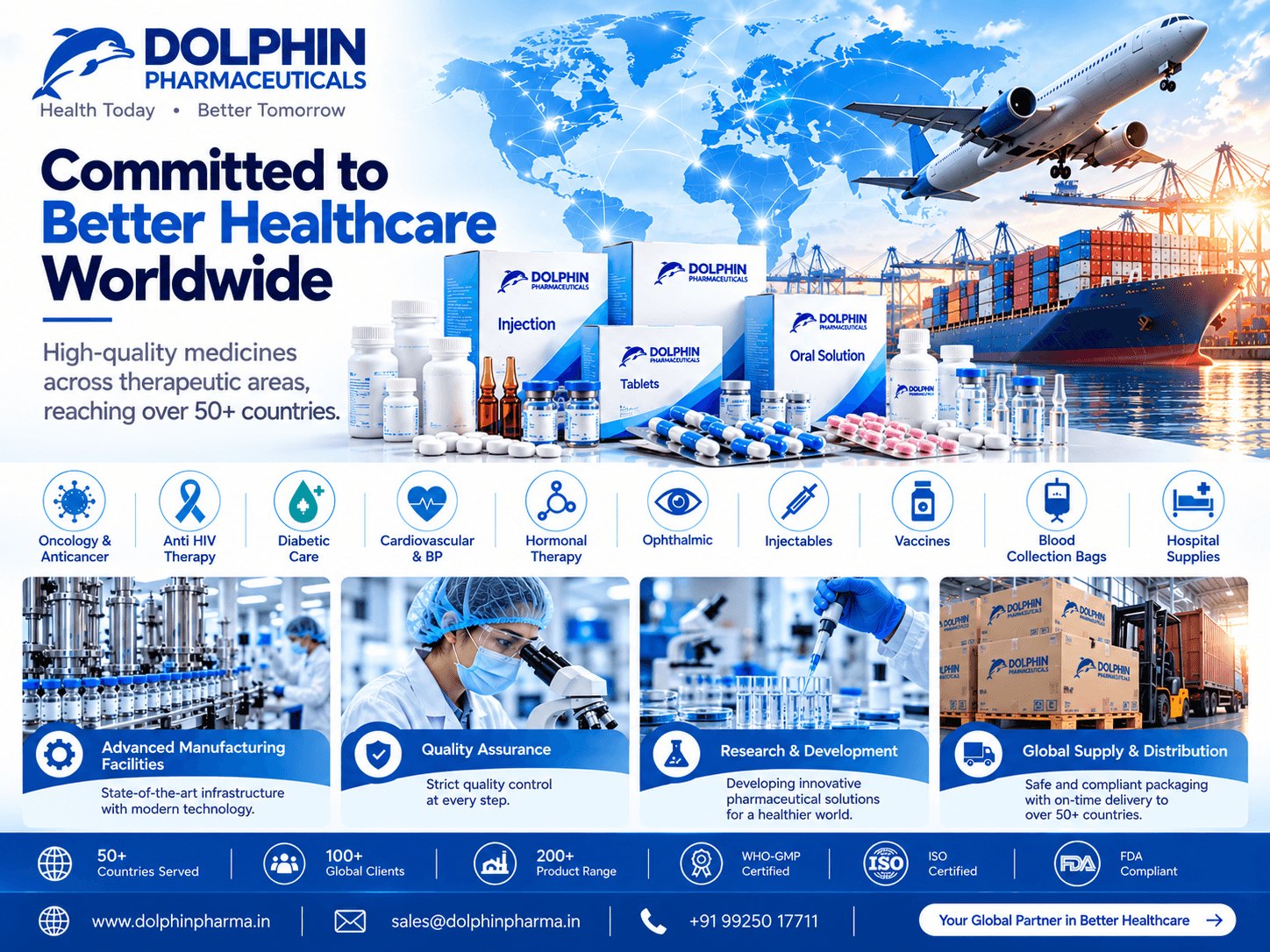
Dolphin Pharmaceuticals, based in Surat, Gujarat, India, welcomes enquiries from international pharmaceutical buyers interested in exploring its published product portfolio, including selected oncology medicines. The company's website provides product information to help buyers begin their sourcing enquiries.
This article explains what international buyers should consider when evaluating an Indian oncology medicine exporter, how a structured procurement process can support global pharmaceutical supply needs, and how Dolphin Pharmaceuticals can be approached for product-specific enquiries.
1. Why Consider India for Oncology Medicine Sourcing?
India is an important participant in the global pharmaceutical supply chain. Its pharmaceutical sector includes manufacturers producing a variety of finished formulations, including tablets, capsules, and injectable medicines.
For international buyers, sourcing from India may provide access to different products, manufacturers, strengths, and packaging options. The most suitable option depends on the buyer's requirements, the product's regulatory status, and the destination country's import rules.
Several considerations make supplier evaluation especially important.
- Product variety: Buyers may investigate different oncology medicines and dosage forms through established pharmaceutical supply channels.
- Manufacturer options: Different manufacturers may offer products with different specifications, brands, and packaging configurations.
- Commercial flexibility: Quotations can be evaluated according to order quantities, shipping arrangements, and purchasing requirements.
- International procurement support: An experienced export-oriented supplier can help coordinate product enquiries, documentation requests, and shipment planning.
These potential advantages should always be assessed on a product-by-product basis. A medicine listed in a catalogue is not automatically available for every destination or approved for sale in every country.
2. Dolphin Pharmaceuticals: A Partner for Pharmaceutical Product Enquiries
Dolphin Pharmaceuticals operates from Surat, Gujarat, India, and presents a range of pharmaceutical products through its website. Its published catalogue includes an Anti-Cancer & Oncology category alongside other pharmaceutical product categories.
For international buyers, this provides a starting point for discussing potential product requirements and evaluating suitable sourcing options.
Dolphin Pharmaceuticals aims to support buyers through clear product enquiries and communication about their purchasing needs. Whether an organisation is preparing a new procurement request or evaluating suppliers for future orders, providing detailed requirements can make the initial assessment more efficient.
Buyers should include the following information when contacting the company:
- Generic name of the required medicine
- Preferred brand, where applicable
- Required strength and dosage form
- Requested quantity and packaging
- Destination country
- Manufacturer preference, if any
- Required product and quality documentation
- Expected delivery schedule
The company can then be approached to confirm whether the requested products can be considered, what information is available, and which additional checks may be necessary before a commercial commitment.
Manufacturer identity, stock status, prices, delivery timelines, and export eligibility should be confirmed directly for each proposed order.
3. Exploring Oncology Medicines for International Procurement
Oncology covers a wide range of medicines used in the management of different cancers. Buyers may search for products by generic name, brand, strength, formulation, or manufacturer.
Dolphin Pharmaceuticals' published product listings include selected oncology medicines such as the following examples.
Capecitabine
Capecitabine is an oral anticancer medicine used in specific treatment settings. Buyers enquiring about capecitabine should specify the required strength, brand preference, manufacturer, and packaging.
The supplier should confirm the precise product offered and the applicable documentation. Importers must also check the product's regulatory status in the destination market before placing an order.
Olaparib
Olaparib is a targeted medicine used for certain cancer indications under specialist medical supervision. Procurement teams should verify the exact formulation, strength, manufacturer, and product documentation relevant to their requirements.
Cabozantinib
Cabozantinib is used for specific cancer indications. Buyers should identify the requested strength and confirm that the proposed product meets their purchasing specifications and the destination market's requirements.
Abiraterone Acetate
Abiraterone acetate is used in certain prostate cancer treatment settings. Buyers should confirm the exact product presentation, manufacturer, packaging, and documentation before proceeding.
These examples illustrate selected products shown in the company's online catalogue. They do not guarantee current stock, availability for every country, or approval by a particular regulatory authority.
Oncology medicines must be prescribed and used under the direction of qualified healthcare professionals. Pharmaceutical importation and distribution must follow applicable local laws and regulatory requirements.
4. What Makes a Reliable Indian Oncology Medicine Exporter?
Selecting an exporter is an important business decision. A buyer-focused supplier should provide clear information and help establish whether the requested product and transaction can meet the buyer's requirements.
Product information and accuracy
A quotation should clearly identify the medicine's generic name, brand if applicable, strength, dosage form, pack size, and manufacturer. If a proposed product differs from the original request, the buyer should review and approve the change before confirming an order.
Manufacturer transparency
Buyers should understand who manufactures the medicine and what role the exporter plays in the supply arrangement. Manufacturer details and relevant credentials should be verified through appropriate records and regulatory channels.
Quality documentation
Depending on the medicine and destination country, buyers may need product specifications, batch-related documents, certificates of analysis, manufacturing information, or other quality records.
The exact documentation requirements vary. Buyers should communicate their checklist early and verify that the documents relate to the product being offered.
Clear communication
Timely, professional communication can help buyers understand product availability, quotation conditions, lead times, and outstanding requirements. Suppliers should communicate limitations or delays honestly rather than making unsupported guarantees.
Transparent commercial terms
International buyers should understand the quotation, currency, payment terms, minimum order quantity where applicable, shipping responsibilities, insurance arrangements, and any additional costs before placing an order.
Evaluating these factors together helps buyers make informed decisions rather than relying solely on the lowest quoted price.
5. Quality, Documentation, and Regulatory Compliance
Quality and regulatory compliance are essential considerations in pharmaceutical exports, particularly for specialist medicines.
Buyers should confirm the applicable requirements with the relevant authorities and qualified regulatory advisers in the importing country. Requirements may vary according to the medicine, its manufacturer, the intended use, and local legislation.
Before proceeding with an oncology medicine order, procurement teams should consider checking:
- The identity of the manufacturer and the exact product being offered.
- Whether the product meets the relevant destination-market requirements.
- Which product, batch, and quality documents are available and required.
- Whether the importer holds the necessary licences or authorisations.
- Whether additional permits or approvals are required for the transaction.
- Whether the proposed packaging, labelling, and shipping arrangements are appropriate.
An exporter should not be assumed to guarantee regulatory approval in every country. Importers remain responsible for confirming their own legal obligations and obtaining any required authorisations.
A careful review before shipment helps establish clearer responsibilities between the supplier and buyer.
6. Storage, Packaging, and International Logistics
Pharmaceutical products may have specific storage and transportation requirements. Some medicines can be stored under controlled room-temperature conditions, while others require refrigeration or additional temperature management.
For oncology products, buyers should check the storage instructions for the exact product rather than relying on general assumptions about the medicine category.
A suitable shipment plan should consider:
- Manufacturer-specified storage conditions
- Packaging and product protection
- Temperature-control requirements, where applicable
- Transit time and route
- Shipping documentation
- Import clearance responsibilities
- Product shelf life and relevant batch information
The supplier and importer should agree on these arrangements before dispatch. If special handling is required, it should be clearly communicated and incorporated into the logistics plan.
Delivery timelines should be confirmed for the specific order and destination. They should not be treated as guaranteed until the relevant product, documentation, transport, and import requirements have been assessed.
7. Supporting Bulk and Repeat-Order Enquiries
Pharmaceutical distributors, wholesalers, and institutional procurement teams may have different purchasing needs. Some require a single product, while others prepare larger product lists or plan recurring orders.
A detailed enquiry helps the supplier assess the request more effectively. Buyers considering bulk or repeat purchases should communicate expected quantities, product specifications, destination details, and anticipated purchasing schedules.
Before confirming a recurring supply arrangement, both parties should discuss:
- Product availability and sourcing arrangements
- Order quantities and commercial terms
- Documentation expectations
- Estimated lead times
- Shipping and storage requirements
- Procedures for communicating changes or delays
Repeat-order arrangements should be based on confirmed terms and realistic supply expectations. Neither product availability nor future delivery should be guaranteed without appropriate confirmation.
For Dolphin Pharmaceuticals, international buyers can begin by submitting their specific requirements for assessment. Product availability, pricing, minimum order quantities, and repeat-supply options must be confirmed individually.
8. How to Start an International Oncology Medicine Enquiry
A structured enquiry can save time and help both parties identify outstanding questions before moving towards an order.
Step 1: Prepare a product list. Include generic names, strengths, dosage forms, quantities, and preferred brands.
Step 2: Identify the destination market. State the country where the products will be imported and distributed.
Step 3: Share documentation requirements. Explain which product, quality, and regulatory records your organisation needs.
Step 4: Request a product-specific quotation. Ask for confirmation of the manufacturer, product presentation, availability, commercial terms, and estimated lead time.
Step 5: Complete your verification. Review the supplier information, confirm the product's regulatory eligibility, and check all applicable import requirements.
Step 6: Confirm the shipment plan. Agree on packaging, storage, transport, documentation, and the responsibilities of each party before dispatch.
Following these steps creates a clearer procurement process and helps reduce avoidable misunderstandings.
9. Why Contact Dolphin Pharmaceuticals?
International pharmaceutical buyers looking for an Indian oncology medicine exporter can approach Dolphin Pharmaceuticals to enquire about its published product range and potential sourcing requirements.
The company provides an online catalogue that allows buyers to begin identifying products of interest. A specific enquiry gives both parties a clearer basis for discussing requirements, documentation, and commercial possibilities.
Dolphin Pharmaceuticals values a buyer-focused approach built around professional communication and clear purchasing requirements. The objective is to help buyers assess whether a suitable supply arrangement can be explored, subject to product availability, manufacturer confirmation, and applicable regulations.
10. Frequently Asked Questions
Who is an Indian oncology medicine exporter?
An Indian oncology medicine exporter is a supplier or export business that arranges the international supply of eligible oncology products. Buyers should verify the supplier's role, the actual manufacturer, product documentation, and destination-market requirements.
What oncology medicines does Dolphin Pharmaceuticals list?
The company's online catalogue includes selected products containing active ingredients such as capecitabine, olaparib, cabozantinib, and abiraterone acetate. Buyers should confirm exact specifications and current availability directly.
Can every listed oncology medicine be exported to every country?
No. Export and import eligibility depends on the product, applicable regulations, required authorisations, and the rules of the destination country. Each transaction requires verification.
What information should buyers send when requesting a quotation?
Provide the medicine's generic name, strength, dosage form, preferred brand, quantity, destination country, manufacturer preference, and documentation requirements.
How can buyers evaluate a pharmaceutical supplier?
Buyers should review product accuracy, manufacturer transparency, applicable quality documentation, communication, commercial terms, and the supplier's ability to clarify export and shipping responsibilities.
Can buyers enquire about bulk orders?
Buyers can submit their required quantities and product list for assessment. Minimum order quantities, pricing, availability, and supply schedules must be confirmed for the specific enquiry.
Conclusion: Building Global Pharmaceutical Supply Partnerships
Choosing an Indian oncology medicine exporter requires a balanced assessment of product information, manufacturer details, quality documentation, regulatory compliance, commercial transparency, and logistics.
India offers international buyers access to a broad pharmaceutical supply network, but every product and destination market must be assessed individually. Clear communication and thorough verification help procurement teams make informed decisions and establish more reliable business relationships.
Dolphin Pharmaceuticals, based in Surat, Gujarat, India, welcomes enquiries from qualified international buyers interested in exploring its published pharmaceutical portfolio, including selected oncology medicines.
Looking for an Indian oncology medicine exporter for your business? Visit the Dolphin Pharmaceuticals website and submit your product requirements to begin an enquiry. Share the medicines, strengths, quantities, destination country, and documentation needs so that the request can be assessed clearly.
Dolphin Pharmaceuticals aims to support buyers through professional communication and a buyer-focused approach to pharmaceutical sourcing, with all proposed products and transactions subject to confirmation of availability and applicable regulatory requirements.
My Company Name -Dolphin Pharmaceuticals
My Website - https://www.dolphinpharma.in/