Fibrin Sealant Kit
Introduction
Reliable access to surgical products and specialized medical supplies is an important part of healthcare procurement. Hospitals, surgical centres, healthcare distributors, and authorized medical product importers need suppliers who can provide accurate product information, appropriate documentation, and clear communication throughout the purchasing process.
A fibrin sealant kit supplier from India may be considered by international buyers exploring sourcing opportunities for surgical hemostatic products. However, selecting the right supplier involves more than comparing quotations. Buyers must verify the product's composition, intended use, manufacturer, regulatory status, storage conditions, packaging, and suitability for the destination market.
Fibrin sealants are biological products designed to support specific surgical applications. Depending on the product, they may be used as an adjunct to hemostasis or for other approved sealing applications. Product indications, preparation procedures, and storage requirements vary by manufacturer and formulation.
Dolphin Pharmaceuticals, based in Surat, Gujarat, India, can be approached by eligible international buyers to discuss pharmaceutical and healthcare product sourcing requirements. Buyers interested in fibrin sealant kits should confirm directly whether the specific product can be supplied or sourced, identify the actual manufacturer, and verify applicable export and import requirements before placing an order.
This article explains how international buyers can evaluate a potential fibrin sealant kit supplier and establish a more transparent procurement process.
Key Highlights
- Product category: Fibrin sealant and surgical hemostatic products.
- Primary procurement objective: Identify a product that matches the healthcare institution's approved requirements.
- Potential buyers: Authorized medical product importers, healthcare distributors, hospitals, and institutional procurement teams.
- Essential checks: Product composition, manufacturer, intended use, quality documentation, and regulatory status.
- Storage: Follow the exact product's approved instructions; some fibrin sealant kits require frozen storage and controlled thawing.
- Transportation: Confirm product-specific temperature requirements and appropriate shipment monitoring.
- Export eligibility: Verify the product and importer authorization in the destination market.
- Supplier selection: Consider product authenticity, documentation, communication, logistics, and total procurement cost.
What Is a Fibrin Sealant Kit?
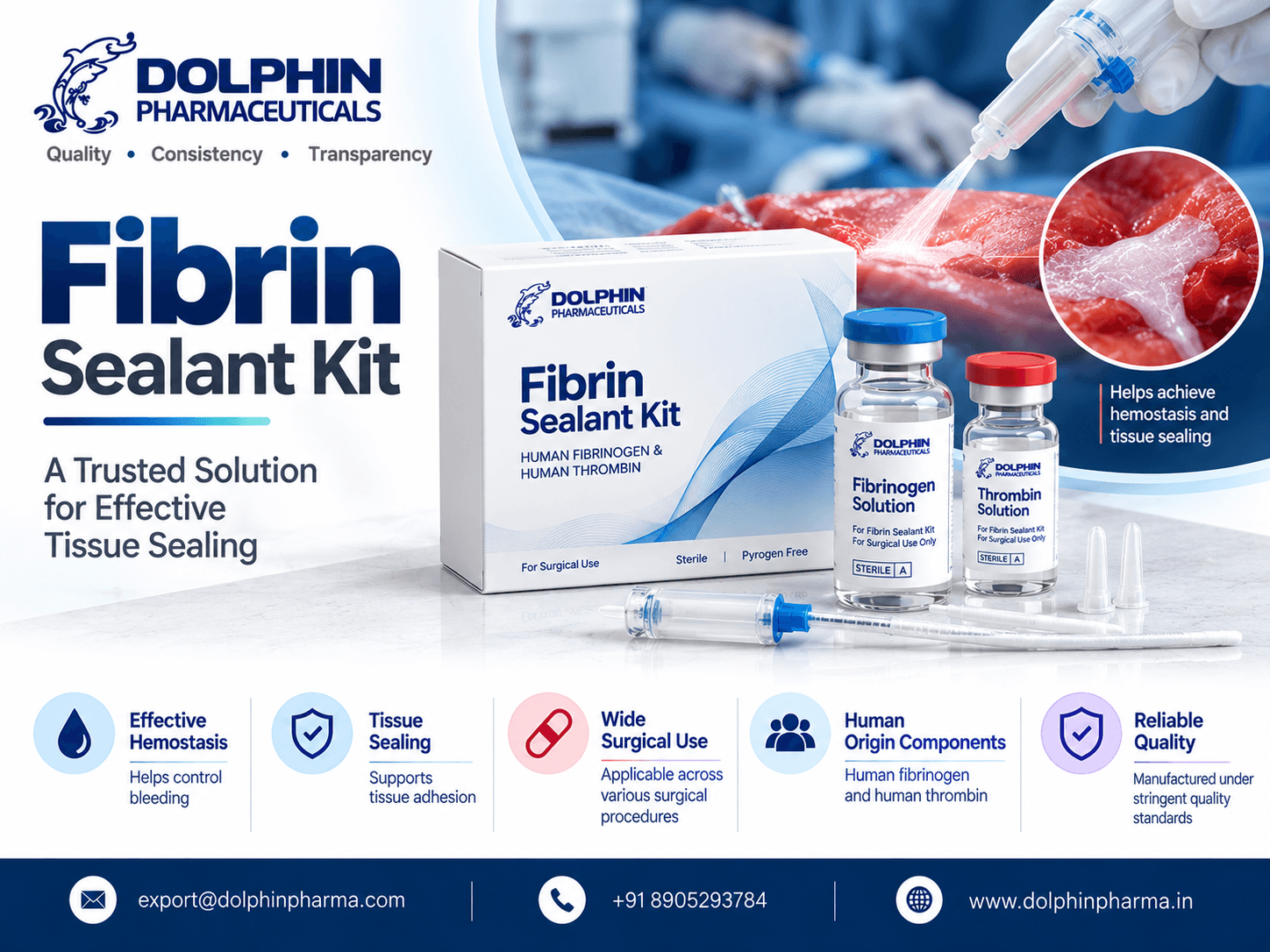
A fibrin sealant kit is a specialized biological product used in certain surgical settings. Many fibrin sealants contain components that work together to form a fibrin clot when combined or applied according to the manufacturer's instructions.
Depending on the product, the components may include fibrinogen and thrombin, along with other ingredients or preparation components. Some kits also include dedicated applicators or devices to support product preparation and application.
The precise formulation, packaging, and intended application depend on the specific product.
Common Procurement Considerations
When sourcing a fibrin sealant kit, buyers should verify:
- Product name: The exact brand or generic product designation.
- Composition: The active biological components and their concentrations, where applicable.
- Presentation: The available kit size or total volume.
- Application system: The included applicator, syringe, or other supplied device.
- Intended use: The approved surgical application specified in the product information.
- Manufacturer: The actual manufacturer and manufacturing site.
- Storage requirements: The specified temperature range and handling instructions.
- Regulatory status: The product's registration, authorization, or other applicable status in the destination market.
These details help prevent confusion between products that may share a general category but differ in formulation, preparation, indications, or application method.
Applications of Fibrin Sealant Products
Fibrin sealants are used in selected surgical settings as adjuncts to conventional techniques. Their approved applications vary by product and jurisdiction.
Surgical Hemostasis
Certain fibrin sealants are indicated as adjuncts to hemostasis when conventional surgical methods, such as sutures, ligatures, or cautery, are ineffective or impractical in the circumstances specified by the product labeling.
The exact indication depends on the individual product.
Tissue Sealing
Some fibrin sealant products have approved sealing applications in particular surgical procedures. Buyers should verify the relevant indication rather than assuming that every fibrin sealant is suitable for every tissue-sealing purpose.
Specialized Surgical Requirements
Different surgical departments may have specific requirements concerning the product's formulation, applicator, package size, and preparation method.
Procurement teams should obtain the required specifications from the relevant clinical department and compare them with the manufacturer's official product information.
Important: Fibrin sealant kits are not interchangeable solely because they belong to the same product category. Their use must follow the specific approved instructions and be determined by qualified healthcare professionals.
Why Consider a Fibrin Sealant Kit Supplier from India?
International buyers may evaluate Indian suppliers when exploring sourcing opportunities for pharmaceutical and healthcare products. The suitability of any supplier should be established through verifiable product information, business credentials, regulatory compliance, and the ability to support the proposed transaction.
1. Product-Specific Sourcing
A suitable supplier should be able to assess the exact product requirement and clarify whether it can supply or source the requested item.
Buyers should provide the product name, manufacturer preference, kit size, required quantity, destination country, and any relevant regulatory requirements.
Clear specifications help reduce errors and make quotation comparisons more meaningful.
2. Manufacturer Transparency
The supplier should identify the actual manufacturer of the proposed fibrin sealant kit. An exporter or distributor may supply products manufactured by another company, so the supplier's role should be clear.
Buyers should verify that the manufacturer name and product details match the product label, quotation, and supporting documentation.
3. Documentation Support
Biological surgical products require careful documentation review. Depending on the product and destination market, buyers may need product specifications, manufacturer information, batch details, certificates, and evidence of applicable regulatory authorization.
The documents must correspond to the exact product being supplied.
4. International Procurement Coordination
Cross-border procurement can involve several parties, including the supplier, manufacturer, importer, logistics provider, customs representative, and regulatory authority.
Clear communication about documentation, shipping conditions, lead times, and commercial terms helps buyers coordinate these responsibilities before dispatch.
Dolphin Pharmaceuticals: International Healthcare Product Sourcing
Dolphin Pharmaceuticals, based in Surat, Gujarat, India, can be contacted by eligible international buyers to discuss healthcare product sourcing enquiries.
For fibrin sealant kits, buyers should request confirmation of the exact product and its availability rather than assume that the company manufactures, stocks, or exports a particular brand.
Before proceeding with a purchase, ask for confirmation of:
- Exact product name and composition.
- Manufacturer and manufacturing location.
- Kit size and supplied accessories.
- Current availability and quotation.
- Applicable product and batch documentation.
- Storage and transportation requirements.
- Product registration or authorization status, where applicable.
- Eligibility for export to the destination country.
- Estimated dispatch time and shipping arrangements.
This information helps procurement teams assess whether the proposed supply arrangement meets their institutional and regulatory requirements.
How to Choose a Reliable Fibrin Sealant Kit Supplier
Choosing a supplier requires a structured evaluation of the product, the business supplying it, and the proposed distribution arrangement.
Verify Business Credentials
Review the supplier's legal business details, relevant licences, and role in the supply chain.
Establish whether the company is the manufacturer, an authorized distributor, or an exporter sourcing products from another organization. Verify any authorizations required for the supplier's role in the transaction.
Confirm the Product Specification
Check the exact product name, formulation, kit size, included accessories, intended use, and manufacturer.
If a hospital or surgical department has specified a particular product, the offered item should be compared against those requirements rather than selected using a broad category name alone.
Review Quality Documentation
Request the documents applicable to the specific product and transaction. Depending on the product and destination requirements, these may include:
- Product specifications and official product information.
- Manufacturer and manufacturing-site details.
- Batch or lot number.
- Manufacturing and expiry dates.
- Certificate of Analysis, where applicable.
- Relevant quality-system or manufacturing certificates.
- Sterility-related documentation, where applicable.
- Product registration or authorization information.
- Shipment and traceability records.
Check that the information is consistent across the quotation, product label, and supporting records. Resolve discrepancies before approving the shipment.
Assess Communication and Supply Planning
A dependable supplier should clearly communicate product availability, quotation validity, minimum order quantities where applicable, expected lead time, and the documents it can provide.
For recurring procurement, buyers should also discuss order planning, shelf life, and the supplier's ability to support future enquiries without making assumptions about guaranteed availability.
Compare the Total Procurement Cost
Compare quotations for the same product and specifications. Consider the product price, freight, insurance where applicable, temperature-controlled transportation, customs-related expenses, documentation, and local handling.
The lowest price alone does not establish product authenticity, regulatory suitability, or supply reliability.
Storage, Cold Chain, and Transportation Requirements
Storage and transportation are particularly important for certain fibrin sealant products because they may contain biological components with specific temperature requirements.
Requirements differ by formulation and manufacturer. Some products are supplied frozen and must remain under specified frozen conditions until use. After thawing, permitted storage periods may be limited, and refreezing may be prohibited.
For example, the official US prescribing information for VISTASEAL describes frozen storage and product-specific conditions after thawing. TISSEEL has its own preparation and handling instructions. These examples illustrate why the exact product label must govern procurement and logistics planning.
Before shipment, buyers should confirm:
- Required storage temperature before dispatch.
- Whether the product must remain frozen during transport.
- Permitted temperature excursions, if any.
- Packaging and protection requirements.
- Temperature-monitoring arrangements, where applicable.
- Thawing and preparation instructions.
- Permitted use period after thawing or reconstitution.
- Procedures for receiving, inspecting, and storing the shipment.
The exporter, importer, and logistics provider should agree on responsibilities before dispatch. Product-specific instructions must be followed throughout transportation and storage.
Regulatory Requirements for International Procurement
Fibrin sealant kits may be subject to specific requirements for biological products, medicines, or other regulated healthcare products, depending on the product classification and destination market.
Before confirming an international order, buyers should verify:
- Whether the exact product is registered or otherwise authorized in the destination country.
- Whether an import permit or additional approval is required.
- Whether the importing organization is appropriately licensed or authorized.
- Which product, manufacturer, and quality documents must be submitted.
- Whether labelling and packaging meet local requirements.
- Whether the product can be transported under the proposed shipping conditions.
- Whether additional requirements apply to biological components or temperature-controlled shipments.
The supplier should identify which documents it can provide. The importing organization should confirm the applicable requirements with the relevant regulatory authority or qualified compliance professional.
A product being available in one country does not automatically mean it can be imported or sold in another. Regulatory eligibility should be confirmed before the order is finalized or the shipment dispatched.
How to Request a Quotation
A detailed enquiry helps a supplier understand the buyer's needs and assess whether a suitable sourcing option may be available.
International buyers contacting Dolphin Pharmaceuticals should include:
- Required product name or brand.
- Manufacturer preference, if applicable.
- Required kit size or presentation.
- Quantity required.
- Destination country.
- Importer or purchasing organization details.
- Known registration or import authorization requirements.
- Required product and quality documents.
- Storage and transportation expectations.
- Preferred delivery timeline.
Request written confirmation of the product identity, manufacturer, availability, quotation validity, documentation, and export eligibility before placing an order.
Frequently Asked Questions
1. What is a fibrin sealant kit used for?
Fibrin sealant kits are used in selected surgical applications, including certain hemostatic or tissue-sealing purposes, depending on the specific product's approved indications. Their use should follow the manufacturer's instructions and be determined by qualified healthcare professionals.
2. How can I find a fibrin sealant kit supplier from India?
Start by identifying the exact product and evaluating potential suppliers based on business credentials, manufacturer transparency, product documentation, regulatory compliance, storage capability, and export arrangements.
3. Does Dolphin Pharmaceuticals currently supply fibrin sealant kits?
Current availability, manufacturer, and export eligibility must be confirmed directly with Dolphin Pharmaceuticals. A general healthcare product enquiry does not establish that a particular fibrin sealant kit is stocked or available.
4. What documents should buyers request?
Depending on the product and destination market, buyers may need product specifications, manufacturer details, batch information, applicable quality certificates, registration or authorization documents, and shipping records.
5. Do fibrin sealant kits require cold-chain transportation?
Some fibrin sealant products require frozen storage, while others may have different handling conditions. Buyers should follow the specific manufacturer's approved labeling and confirm the required transportation conditions before dispatch.
6. Can all fibrin sealant kits be used for the same surgical procedures?
No. Product formulations, approved indications, preparation methods, and application systems can differ. Buyers should verify the exact product against the intended clinical requirements.
7. Can fibrin sealant kits be exported to any country?
No. Export and import eligibility depends on the product, the relevant regulatory approvals, the authorization of the importer, and the requirements of the destination market.
Conclusion
Finding a suitable fibrin sealant kit supplier from India requires careful evaluation of product specifications, manufacturer credentials, quality documentation, storage requirements, shipping arrangements, and regulatory eligibility.
Dolphin Pharmaceuticals, based in Surat, Gujarat, India, can be approached by eligible international buyers to discuss healthcare product sourcing requirements. Buyers interested in fibrin sealant kits should confirm the exact product, manufacturer, current availability, supporting documents, and export eligibility before placing an order.
For hospitals, medical product importers, and healthcare distributors, a transparent procurement process can help reduce avoidable product mismatches and support responsible supply-chain management.
Planning an international procurement enquiry? Prepare your required product specification, quantity, destination country, manufacturer preference, and documentation requirements before contacting Dolphin Pharmaceuticals to discuss potential sourcing options.
Disclaimer: This article is intended for healthcare procurement and general informational purposes. Product availability, manufacturer details, regulatory status, and export eligibility must be independently verified. Fibrin sealant products should be used only by qualified healthcare professionals according to the specific approved product instructions.
My Company Name - Dolphin Pharmaceuticals
My Website - https://www.dolphinpharma.in/