Generic Name:
Fibrin Sealant Kit IP 0.5 mL
Storage Condition:
2°C TO 8°C Temperature
Packing:
1 Kit Per Pack
Mfg / Mkd By:
Reliance Life Sciences Pvt Ltd
Doses:
Therapeutic Use:
Description:
Introduction :
Dolphin Pharmaceutical is a leading supplier of Reliseal (Fibrin sealant kit) from India, based in Surat, Gujarat, specializing in the supply of high-quality specialty medicines. We serve pharmacy, distributors, hospitals, and healthcare organizations with quality-assured Reliseal (Fibrin sealant kit).
Reliseal (Fibrin sealant kit) is primarily used in the surgery under the supervision of qualified healthcare professionals. Dolphin Pharmaceutical is committed to providing authentic medicines, competitive pricing, complete support, healthcare requirements.
Reliseal (Fibrin Sealant Kit) :
Reliseal (Fibrin Sealant Kit), manufactured and marketed by Reliance Life Sciences Pvt Ltd., belongs to the class of biological surgical adhesives and hemostatic agents. It is used to support blood clot formation, control bleeding, seal tissues, and promote tissue adhesion during selected surgical procedures.
Fibrin sealants are used in specialties such as ophthalmology, general surgery, and plastic and reconstructive surgery, depending on the product’s approved indications. In ophthalmic surgery, fibrin glue may be used to secure conjunctival autografts during pterygium surgery and support wound closure, potentially reducing the need for sutures. Its use should follow the manufacturer’s instructions and the surgeon’s clinical judgment.
Introduction to Fibrin Glue
Fibrin glue has an unique application for fixing tissues and caring for wounds during surgery. Fibrin glue works as an adhesive that joins tissues, seals wounds and holds grafts while they heal. Fibrin glue is especially helpful when sutures can cause irritation add time or complicate the procedure.
Fibrin glue is made from two substances: fibrinogen and thrombin. These substances are parts of the body’s blood clotting system. When fibrinogen and thrombin are mixed together they form a fibrin clot that acts like tissue glue. Application of fibrin glue in pterygium surgery conjunctival procedures, corneal wound management, amniotic membrane transplantation and some oculoplastic operations. Using Fibrin glue does not mean that sutures are no longer used. Instead Fibrin glue gives surgeons an option that can be chosen based on the type of surgery the condition of the tissue and the surgeon’s experience.
The use of Fibrin glue in ophthalmic surgery can reduce the number of sutures needed. May improve patient comfort during the early days after surgery. Pterygium surgery is one of the studied uses of Fibrin glue. In this procedure a conjunctival autograft can be fixed using Fibrin glue of several sutures. Many studies have shown operating times and less pain after surgery when Fibrin glue is used. However, results can vary between cases and patients. Therefore, Fibrin glue should be seen as a choice, not a replacement for suturing.
What Is a Fibrin Sealant?
A fibrin sealant is a biological surgical sealant that is designed to reproduce aspects of the final stage of the body's natural coagulation process. When the appropriate components come together at the intended site, they can form a fibrin clot or fibrin matrix. This matrix can help create a temporary seal over tissue surfaces and may support local hemostasis and tissue adhesion.
Reliseal belongs to this category of surgical solutions. It is intended to be used as directed by qualified medical professionals and should not be considered a replacement for established surgical techniques when those techniques are clinically appropriate. Instead, a fibrin sealant may serve as an adjunct in situations where the surgeon determines that additional topical support is beneficial.
Role of Tissue Adhesives in Ophthalmology
Tissue adhesives are materials used to connect, seal support tissues during surgery. In ophthalmology tissue adhesives are especially useful because many parts of the eye are thin and fragile. The main function of a tissue adhesive is to keep tissues in place while the body heals naturally.
Important roles include:
• Fixing grafts.
• Supporting membrane transplant.
• Sealing selected wounds.
• Helping close some defects.
• Fixing skin or tissue grafts.
• Reducing the need for sutures.
• Assisting wound healing in procedures.
Composition and Mechanism of Action
Fibrin glue works by using the body’s clotting process. The two key ingredients are fibrinogen and thrombin, Aprotinin. Fibrinogen is a protein found in blood that's normally soluble. Thrombin is an enzyme that changes fibrinogen into fibrin. When fibrinogen and thrombin are mixed thrombin turns fibrinogen into a network of fibrin fibers. This network forms a clot that can stick two pieces of tissue together. The strength of the bond grows as the clot sets and tissues stay close to each other. Later the fibrin material breaks down naturally as the healing process continues. That means Fibrin glue offers support, not fixation.
Main Components
Each Kit Contains:
1 Vial of Component 1
(Fibrinogen Concentration), Sterile
Each mL contains:
Fibrinogen 70mg as clottable protein
Factor XIII activity 16 units.
1 Vial of Component 2
(Thrombin Concentration), Sterile
Each mL contains:
Thrombin 500 IU
Contains Calcium Chloride.
Before reconstitution and application, read direction in the packaging insert.
The Fibrin Sealant Kit also contains:
- 1 Vial of Aprotinin solution (Bovine) Sterile Each mL contains Aprotinin B.P. 3000 kiu.
- 1 x 10 mL Ampoule of sterile water for injection I.P
- 1 Applicator and 2 mixing chambers
- 2 Application needles
- 4 x 2 mL disposable syringes and 4 needles for reconstitution
Reconstituted solution of Fibrinogen and Thrombin to be used within 4 hours.
Application of fibrin glue in Pterygium Surgery
Application of fibrin glue in Pterygium surgery is one of the areas. A pterygium is a growth of tissue that spreads onto the cornea. After removing the pterygium a conjunctival autograft is usually placed over the area. This graft needs to stay stable while the eye heals. Traditionally surgeons use sutures to hold the graft in place. Fibrin glue offers another way by forming a bond between the graft and surrounding conjunctival tissue. This can reduce the number of sutures. Possibly make the operation faster.
• Many clinical studies have examined how Fibrin glue functions, in pterygium surgery.
• Research comparing Fibrin glue to sutures has often found that surgery times are shorter and that patients feel pain right after pterygium surgery.
• Possible issues include graft movement, graft retraction, graft separation, granuloma and other problems.
• Placing the graft correctly is therefore very important.
Applications in Pterygium Surgery
• Fixation of autografts with fibrin glue.
• Lowering the number of sutures required.
• Time.
• Possible pain after surgery.
• Support for graft stability.
• Less irritation, from sutures.
Advantages of Fibrin Glue in Ophthalmic surgery
The application of fibrin glue offers possible advantages in selected ophthalmic procedures. One of the benefits is a reduction in surgical time. This is particularly important when a procedure would otherwise require sutures. Pterygium surgery is an example because the conjunctival graft can be fixed quickly using fibrin glue. Reduced surgical manipulation may also be helpful for comfort. Fewer sutures can mean exposed knots and less mechanical irritation on the ocular surface.
Another possible advantage is reduced discomfort. Sutures can cause a foreign-body sensation and local irritation. When fewer sutures are required these problems may be reduced. The application of fibrin glue in surgery may also provide a smooth interface between the graft and surrounding tissue. However the degree of benefit varies according to the operation and patient. Fibrin glue should therefore be used when its advantages fit the surgical goal.
Main advantages
• Operating time in selected procedures.
• Sutureless or reduced-suture fixation.
• Less mechanical irritation.
• Possible reduction in discomfort.
• Useful for graft fixation.
• Support for tissue healing.
• Possible reduction in inflammation caused by sutures.
• Useful in selected surface procedures.
Applications of fibrin glue in Surgery
1. Ophthalmology
Fibrin sealants are used in selected eye surgeries to promote tissue adhesion and support conjunctival wound closure. They are commonly used to secure conjunctival grafts during pterygium surgery, helping reduce the need for sutures and improving postoperative comfort.
2. General Surgery
Fibrin sealants help control bleeding and seal tissue surfaces during selected general surgical procedures. They form a fibrin clot that supports local hemostasis and tissue adhesion, serving as an adjunct to conventional surgical techniques.
3. Plastic and Reconstructive Surgery
Fibrin sealants are used to secure skin grafts and tissue flaps during reconstructive procedures. They promote adhesion between tissue surfaces and the wound bed, helping maintain graft positioning and potentially reducing the need for additional fixation.
4. Cardiovascular Surgery
Fibrin sealants may be used during selected cardiovascular procedures to support bleeding control at surgical sites. They promote local clot formation and help achieve hemostasis when used alongside appropriate surgical techniques.
5. Gastrointestinal Surgery
Fibrin sealants may be used in selected gastrointestinal procedures to support tissue sealing and control localized bleeding. Depending on the product and procedure, they may help reinforce certain surgical sites or connections as an adjunct to standard surgical methods.
6. Trauma and Wound Management
Fibrin sealants may be used in selected wound-management procedures to assist with bleeding control and tissue sealing. They form an adhesive fibrin matrix that supports local clot formation, depending on the wound type and the product’s approved indications.
Our Other Products
View All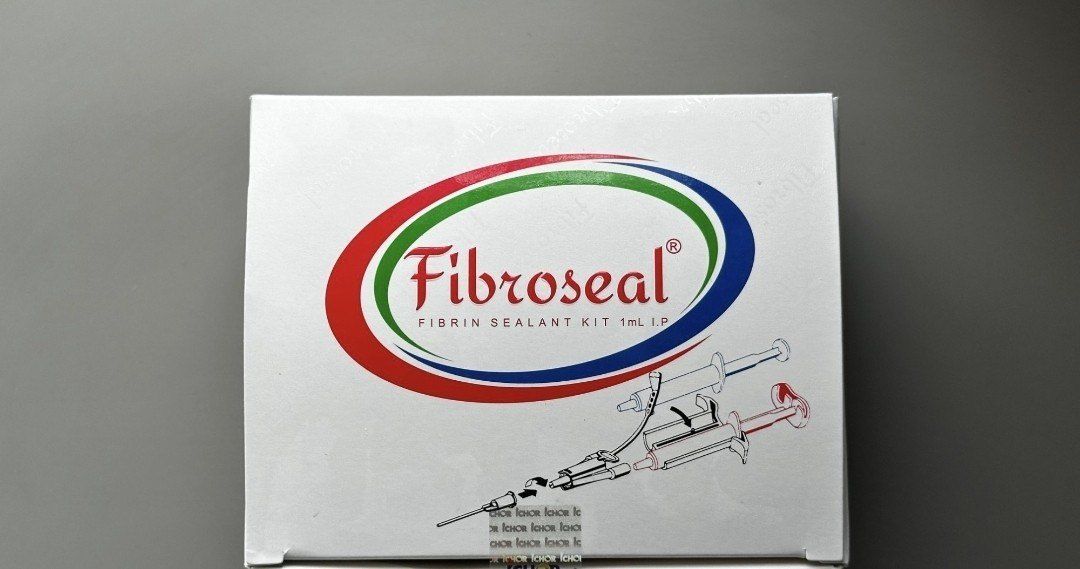
Fibroseal (Fibrin Sealant Kit) 1 ml
Generic Name: Fibrin Sealant Kit IP 1mL
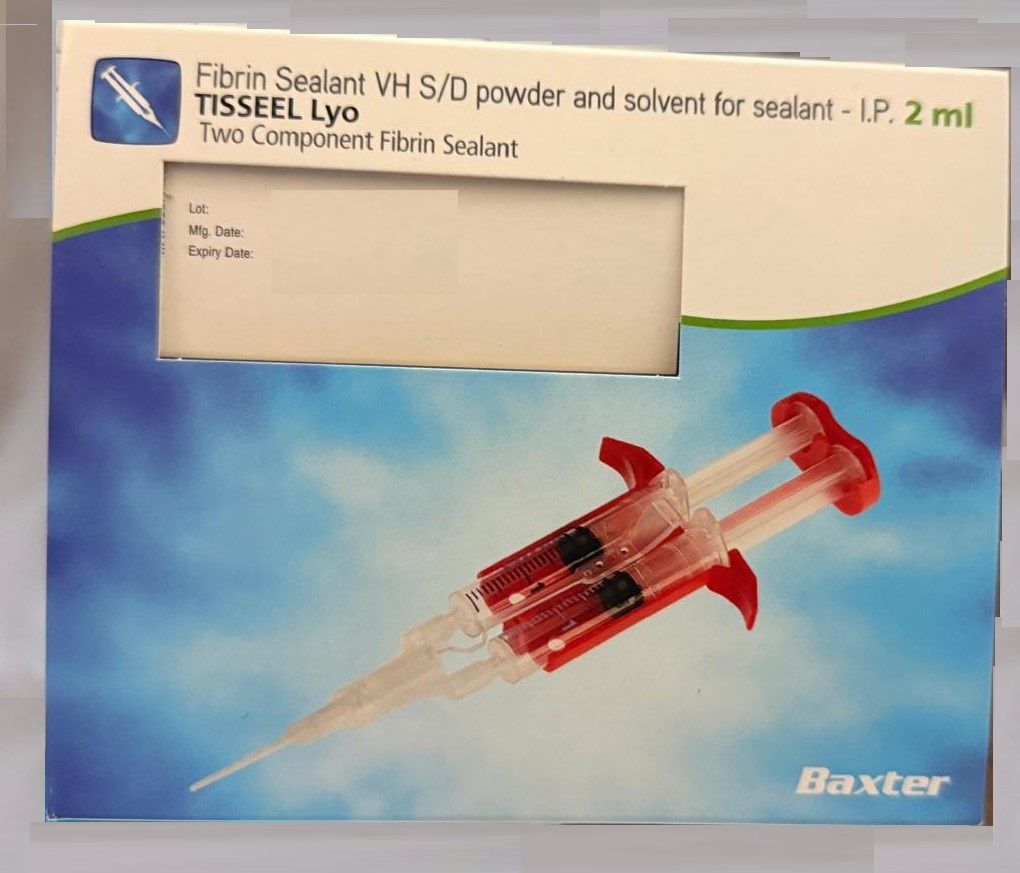
Tisseel Lyo (Fibrin Sealant Kit) 2 ml
Generic Name: Fibrin Sealant Kit 4ml