
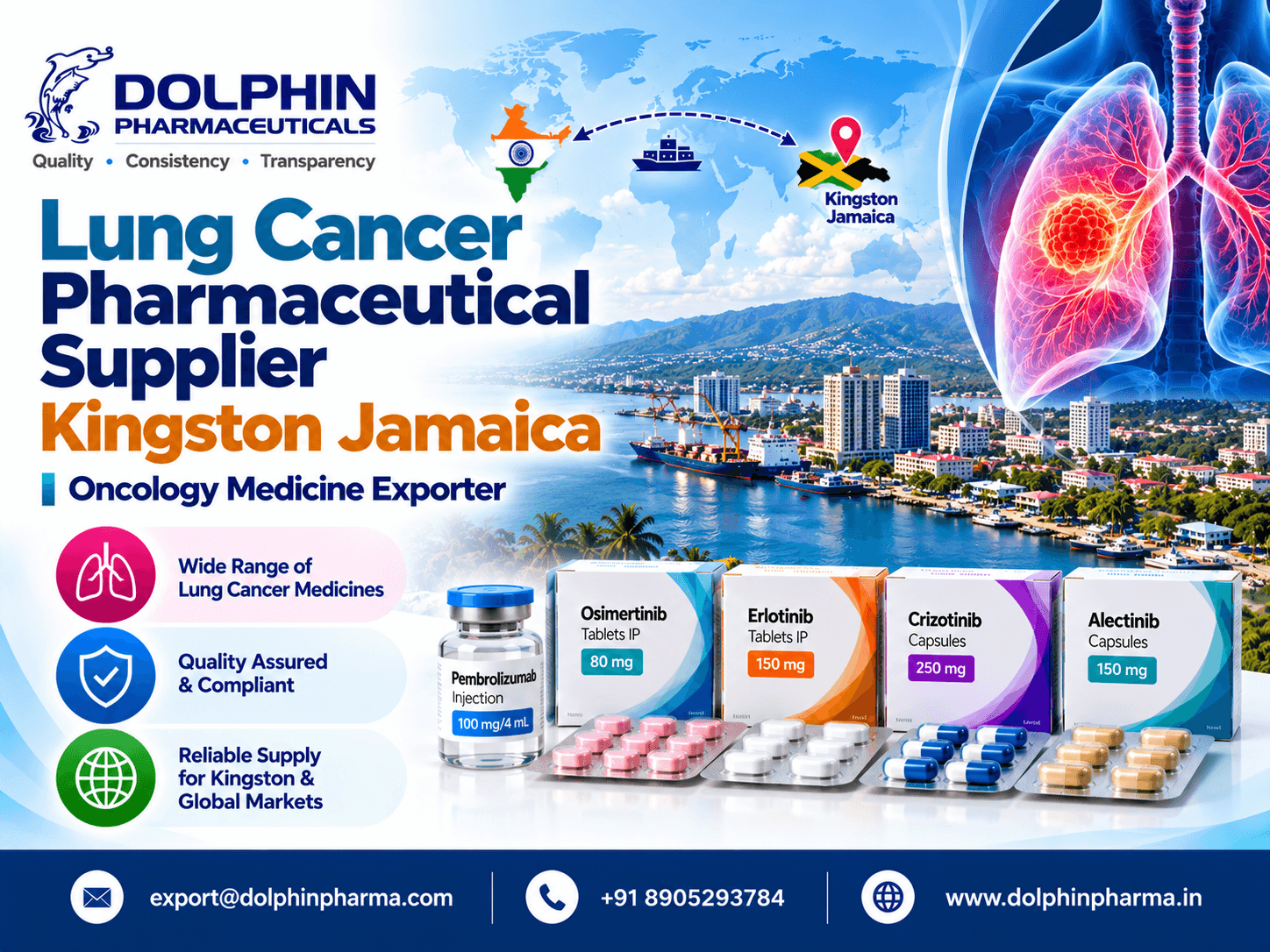
Introduction
Lung cancer is a major global healthcare concern, creating an ongoing need for responsible pharmaceutical procurement, reliable supply-chain coordination, and access to appropriately authorized medicines. For pharmaceutical importers, licensed distributors, hospital procurement teams, and healthcare organizations serving Kingston, Jamaica, selecting a suitable lung cancer pharmaceutical supplier requires careful evaluation of product specifications, manufacturer credentials, quality documentation, regulatory eligibility, and supply arrangements.
India is an established pharmaceutical manufacturing and export market. Depending on the medicine and applicable regulations, Jamaican buyers may consider Indian pharmaceutical suppliers when evaluating oncology medicine sourcing options. However, choosing an export partner involves more than comparing prices. Buyers must verify the exact product required, understand the supplier's role, review available documentation, and confirm whether the medicine can legally be imported into Jamaica.
Dolphin Pharmaceuticals supports pharmaceutical sourcing enquiries and discussions concerning international supply arrangements. For buyers in Kingston and across Jamaica, a structured procurement process can help clarify product requirements, documentation needs, and the practical steps involved in evaluating a potential supplier.
This guide explains how pharmaceutical buyers can evaluate lung cancer medicine suppliers, assess quality assurance practices, understand Jamaican import requirements, and prepare a professional sourcing enquiry.
1. Understanding Lung Cancer Medicines
Lung cancer includes different types of disease, and the medicines used depend on factors such as the specific diagnosis, tumour characteristics, relevant test results, and recommendations of qualified healthcare professionals.
Depending on the diagnosis and approved indication, pharmaceutical treatment may involve several categories of medicines.
- Chemotherapy medicines: Products used in particular cancer treatment regimens.
- Targeted therapies: Medicines designed to act on specific biological targets associated with certain cancers.
- Immunotherapies: Medicines that work through particular mechanisms involving the immune system and are suitable only in selected clinical circumstances.
- Other specialist oncology medicines: Products used for specific indications under medical supervision.
These categories provide general background for pharmaceutical sourcing and are not treatment recommendations. Medicine selection and prescribing decisions must remain with qualified healthcare professionals.
For importers and distributors, the starting point is to identify the exact medicine requested by the purchasing institution. A complete product enquiry should include the medicine name, active ingredient where applicable, strength, dosage form, pack size, manufacturer preference, and requested quantity.
Clear specifications help suppliers assess enquiries accurately and reduce misunderstandings during quotation, documentation, and order processing.
2. Why Consider an Indian Pharmaceutical Supplier?
India has a broad pharmaceutical manufacturing and export sector. Depending on the requested product, manufacturer, and applicable regulations, Jamaican buyers may consider Indian suppliers when evaluating potential sourcing options.
However, not every exporter supplies every oncology medicine. A supplier's suitability depends on the specific product, manufacturer credentials, available documentation, sourcing arrangements, and requirements in the destination market.
When evaluating an Indian pharmaceutical supplier, buyers should consider the following factors.
Manufacturer transparency
Confirm the legal identity of the manufacturer and, where relevant, the manufacturing facility. Establish whether the proposed supplier manufactures the medicine, distributes it, or arranges sourcing through another organization.
Product documentation
Ask which product-specific documents are available for review, including relevant quality records, product specifications, and batch documentation.
Supply planning
Discuss product availability, minimum order quantities where applicable, estimated lead times, packaging arrangements, and the process for confirming an order.
Commercial clarity
Request a written quotation that identifies the medicine, strength, dosage form, pack size, quantity, pricing basis, payment terms, and shipping responsibilities.
Regulatory awareness
Confirm whether the proposed medicine and supply arrangement can meet Jamaica's applicable product registration, import permit, and importer authorization requirements.
Evaluating these factors helps buyers compare suppliers on verifiable information rather than promotional statements alone.
3. How to Choose a Reliable Lung Cancer Pharmaceutical Supplier
Selecting an oncology medicine supplier should involve a documented evaluation process. Buyers should verify the supplier's identity, proposed sourcing channel, product specifications, and supporting documentation before approving an order.
A supplier's general credentials do not automatically establish that every medicine it offers is approved for every destination market. Likewise, a quality certificate should be reviewed for its validity, scope, issuing organization, and relevance to the particular product and manufacturing facility.
A practical supplier evaluation should cover:
- Product identification: Confirm the medicine name, strength, dosage form, and pack size.
- Manufacturer verification: Establish who manufactures the proposed product.
- Documentation review: Check which product-specific quality and regulatory documents are available.
- Regulatory eligibility: Confirm Jamaican requirements for the medicine and importer.
- Commercial review: Assess pricing, payment terms, quantities, and shipping responsibilities.
- Communication: Ensure product questions and documentation requests can be addressed clearly.
Where regulatory questions remain unresolved, buyers should consult the relevant Jamaican authority or a qualified regulatory professional before proceeding.
4. Quality Assurance and Pharmaceutical Documentation
Quality assurance is an essential part of pharmaceutical procurement, particularly for specialist oncology medicines. Buyers should establish which documents are required for the specific product and import transaction before approving a supplier or shipment.
Depending on the medicine and applicable requirements, relevant documentation may include:
- Certificate of Analysis (CoA), where applicable.
- Product specifications and approved product information.
- Relevant manufacturing licences and quality certifications.
- Batch identification and expiry-date information.
- Certificate of origin, where required.
- Product storage and handling instructions.
- Shipping and temperature-monitoring records, where applicable.
The required documents vary according to the product and regulatory pathway. Buyers should confirm the precise requirements with the supplier and the relevant Jamaican authorities.
Check packaging and labelling
Packaging and labelling should match the applicable approved product specifications and regulatory requirements. Buyers should review the medicine name, strength, dosage form, batch number, expiry information, and storage instructions.
Any discrepancy between the purchase order, supporting documentation, and delivered product should be investigated before the product is accepted into inventory.
Maintain product traceability
Importers and distributors should maintain records linking received batches with their suppliers and subsequent distribution. They should also establish procedures for investigating complaints, reporting suspected quality issues, and managing recalls when necessary.
Clear traceability procedures support accountability and help reduce avoidable supply-chain risks.
5. Understanding Jamaica's Pharmaceutical Import Requirements
Regulatory compliance is a critical consideration when sourcing lung cancer medicines for Kingston or other locations in Jamaica.
Jamaica's Ministry of Health & Wellness oversees pharmaceutical product registration and import permit processing through its relevant regulatory functions. Most pharmaceutical products require registration before importation, distribution, and sale. Medicines intended for life-threatening illnesses, including cancer, are among the categories subject to regulatory assessment.
Before arranging a shipment, buyers should confirm the current requirements for the exact medicine and importing organization with the relevant Jamaican authority.
Important considerations include:
- Product registration or approval: Establish the regulatory status of the specific medicine.
- Import permit: Confirm which permit is required and how to apply.
- Importer authorization: Verify that the Jamaican importing organization meets applicable requirements.
- Supporting documentation: Prepare the product information and supporting records requested by the authority.
- Customs clearance: Coordinate commercial invoices, transport documents, permit information, and other applicable paperwork.
- Product-specific conditions: Check any additional requirements relating to packaging, storage, or handling.
The availability of a medicine from an overseas supplier does not automatically mean it can be imported, distributed, or sold in Jamaica. Regulatory eligibility should be confirmed before dispatch.
6. Pharmaceutical Supply Coordination in Kingston
Kingston is Jamaica's capital and an important centre for commercial activity and healthcare services. Pharmaceutical importers, distributors, and procurement teams serving Kingston may need to coordinate international sourcing, regulatory paperwork, transportation, inventory planning, and delivery arrangements.
A well-organized supply process starts with a complete product enquiry. Buyers should specify the requested medicine, quantity, destination, and anticipated purchasing schedule. The supplier can then review the enquiry and clarify potential sourcing options and available documentation.
For pharmaceutical supply arrangements serving Kingston, buyers should consider:
- Confirming the authorized importer and receiving destination.
- Coordinating shipment schedules with the Jamaican importer.
- Allowing sufficient time for regulatory processing and customs clearance.
- Reviewing packaging and storage requirements before dispatch.
- Recording batch numbers and expiry dates when products are received.
- Maintaining suitable inventory and replenishment plans.
- Establishing procedures for delayed, damaged, or nonconforming shipments.
Actual delivery schedules depend on product availability, regulatory processing, shipping arrangements, and other factors. Buyers should obtain an order-specific estimate rather than rely on a general delivery promise.
7. Storage and Transportation of Lung Cancer Medicines
Storage and transportation requirements vary among oncology products. Some medicines may require refrigeration or other temperature-controlled conditions, while others have different manufacturer-defined storage requirements.
Before shipment, the buyer and supplier should confirm the approved storage instructions for the exact product and establish a suitable logistics plan.
Important considerations include:
- Required storage temperature and permitted temperature range.
- Protection from light or other environmental factors, where specified.
- Appropriate packaging and handling instructions.
- Temperature monitoring during transit, where required.
- Procedures for transportation delays or temperature excursions.
- Suitable storage facilities at the receiving destination.
Where a cold chain is required, the plan should cover the entire journey, including transit, customs clearance, temporary storage, and final delivery.
If a shipment may have been exposed to conditions outside the permitted range, it should be assessed under the applicable quality procedure before being released for use.
Responsible logistics planning helps protect product integrity and supports appropriate pharmaceutical distribution.
8. Pricing and Procurement Planning
Price is an important consideration when evaluating pharmaceutical suppliers, but quotations should be compared using consistent product specifications and commercial terms.
Differences in manufacturer, strength, dosage form, pack size, documentation, and shipping arrangements can make direct price comparisons misleading.
A detailed quotation should identify:
- Medicine name and exact product specifications.
- Manufacturer and country of origin.
- Pack size and requested quantity.
- Unit price and total order value.
- Minimum order quantity, where applicable.
- Product availability and estimated lead time.
- Payment terms and quotation validity.
- Shipping and insurance responsibilities.
- Applicable documentation and additional charges.
Buyers should also clarify how delays, product substitutions, order changes, and discrepancies will be managed.
The lowest-priced quotation is not necessarily the most suitable option. Product quality, documentation, regulatory eligibility, traceability, and communication should all be considered alongside cost.
9. How Dolphin Pharmaceuticals Can Support Sourcing Enquiries
Dolphin Pharmaceuticals welcomes enquiries concerning pharmaceutical sourcing and export supply arrangements. Buyers evaluating lung cancer medicines for Jamaica can provide detailed product information to help clarify their procurement requirements.
For an efficient enquiry, include:
- Requested medicine name or active ingredient.
- Required strength and dosage form.
- Preferred manufacturer, if applicable.
- Pack size and estimated quantity.
- Destination: Kingston, Jamaica.
- Required product and quality documentation.
- Expected procurement timeline.
- Any known registration or import conditions.
This information helps establish the scope of the enquiry and the details needed for further evaluation. Product availability, manufacturer details, documentation, pricing, shipping feasibility, and Jamaica-specific eligibility must be confirmed individually.
Dolphin Pharmaceuticals should not be assumed to manufacture every requested medicine or to have automatic authorization for every oncology product in Jamaica. Buyers should verify the proposed manufacturer, supply channel, and product-specific regulatory status before proceeding.
10. Common Mistakes to Avoid When Selecting an Exporter
Jamaican buyers can reduce avoidable procurement risks by avoiding several common mistakes.
Choosing on price alone: Consider product specifications, quality documentation, and regulatory suitability alongside cost.
Assuming overseas availability means Jamaican approval: Verify registration and import requirements for the exact medicine.
Accepting incomplete documentation: Establish the required documents before approving shipment.
Failing to verify the supplier's role: Clarify whether the company is the manufacturer, distributor, or sourcing partner.
Overlooking storage requirements: Confirm the manufacturer's instructions before arranging transport.
Relying on unconfirmed delivery commitments: Obtain a realistic, order-specific schedule.
Neglecting inventory planning: Consider lead times, expiry dates, stock rotation, and replenishment needs.
A consistent supplier assessment process supports informed procurement decisions and clearer expectations between Jamaican buyers and international supply partners.
Frequently Asked Questions
1. How can I find a lung cancer pharmaceutical supplier in Kingston, Jamaica?
Identify the exact medicine and required specifications, then evaluate potential suppliers for manufacturer transparency, quality documentation, regulatory suitability, storage requirements, and commercial terms. Confirm Jamaican import requirements before arranging shipment.
2. Can an Indian pharmaceutical exporter supply lung cancer medicines to Jamaica?
An Indian exporter may be considered if the product, manufacturer, documentation, and proposed supply arrangement meet the buyer's requirements and applicable regulations. The medicine's eligibility for importation into Jamaica must be verified before dispatch.
3. What documents should I request from a lung cancer medicine supplier?
Depending on the product and transaction, relevant documents may include a Certificate of Analysis, product specifications, manufacturing and quality documentation, batch and expiry information, certificate of origin, and shipping records. Confirm the precise requirements for the individual medicine.
4. Do lung cancer medicines require registration in Jamaica?
Most pharmaceutical products require registration before importation, distribution, and sale, and regulated products may require an import permit. Buyers should confirm the current requirements for the specific medicine with Jamaica's Ministry of Health & Wellness.
5. Does Dolphin Pharmaceuticals manufacture every oncology medicine?
Buyers should confirm the company's role for each product enquiry. A pharmaceutical supplier or exporter may work through different manufacturers or sourcing channels. Manufacturer identity and relevant product documentation should be verified individually.
6. What information should I include in a pharmaceutical export enquiry?
Provide the medicine name, strength, dosage form, pack size, requested quantity, destination, preferred manufacturer if applicable, required documentation, and expected purchasing timeline.
Conclusion
Selecting a suitable lung cancer pharmaceutical supplier for Kingston, Jamaica requires careful evaluation of product specifications, manufacturer credentials, quality documentation, regulatory eligibility, storage conditions, and commercial transparency.
Indian pharmaceutical suppliers may provide sourcing options for Jamaican buyers, but every proposed product and supply arrangement must be assessed individually. Product registration, import permits, and importer authorization should be confirmed before shipment.
Dolphin Pharmaceuticals welcomes enquiries from pharmaceutical importers, distributors, and procurement teams interested in discussing pharmaceutical sourcing and export supply arrangements. Providing clear product specifications and destination requirements is a practical first step toward evaluating a suitable supply option.
The objective is to support a transparent, compliant, and professionally coordinated pharmaceutical procurement process for buyers serving Kingston and the wider Jamaican market.
My Company Name - Dolphin Pharmaceuticals
My Website - https://www.dolphinpharma.in/