
Introduction
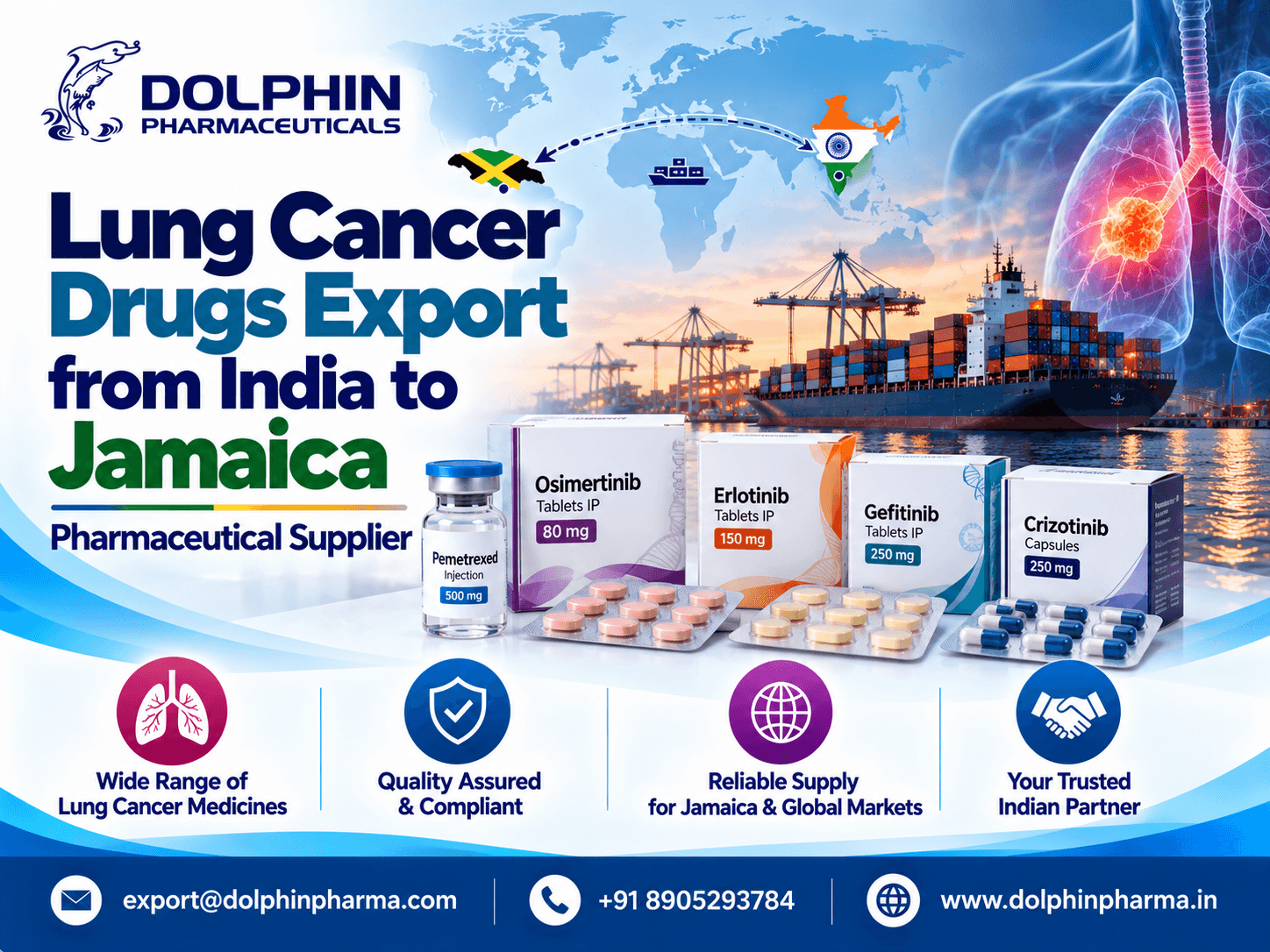
Lung cancer is a significant global healthcare concern, and dependable access to oncology medicines remains an important consideration for healthcare providers, pharmaceutical importers, and medicine distributors. For Jamaican buyers, sourcing lung cancer drugs from international suppliers requires careful evaluation of product quality, manufacturer information, regulatory requirements, documentation, and shipping arrangements.
India has an established pharmaceutical industry and serves international markets through manufacturers, suppliers, and exporters. For Jamaican pharmaceutical buyers, Indian suppliers may offer an additional option when evaluating oncology medicine sourcing requirements. However, selecting a suitable supplier involves more than comparing prices. Buyers must verify the specific medicine, confirm its source, and establish whether the proposed product can legally be imported into Jamaica.
Dolphin Pharmaceuticals supports international pharmaceutical sourcing enquiries and helps buyers assess their product requirements and potential supply arrangements. A structured procurement process can help Jamaican importers clarify product specifications, evaluate available sourcing options, and prepare for the regulatory and logistical requirements involved in international pharmaceutical trade.
This guide explains how Jamaican buyers can evaluate an Indian lung cancer drug supplier, what to consider when sourcing oncology medicines, and how to build a responsible pharmaceutical supply relationship.
1. Understanding Lung Cancer Medicine Sourcing Requirements
Lung cancer includes different disease types and subtypes, and treatment approaches vary according to clinical characteristics and individual patient needs. Consequently, the term “lung cancer drugs” covers multiple categories of medicines rather than one interchangeable group of products.
For pharmaceutical procurement, buyers should identify the precise product they require before requesting a quotation.
Important details include:
- Generic name or requested product name.
- Strength and dosage form.
- Preferred manufacturer or brand, where applicable.
- Required quantity and packaging configuration.
- Destination and intended distribution channel.
- Product registration and import authorization requirements.
- Documentation and labelling requirements.
- Required remaining shelf life.
- Expected procurement and delivery timeline.
Providing these details helps the supplier evaluate the enquiry accurately and identify any information that needs clarification.
Jamaican buyers should confirm the regulatory status of each medicine before proceeding. A product being available in India does not automatically establish that it is approved for importation, distribution, or sale in Jamaica.
2. Why Consider a Pharmaceutical Supplier from India?
India is an established participant in the international pharmaceutical industry. Buyers may consider Indian pharmaceutical suppliers when exploring sourcing options for different medicine categories, including oncology products.
The suitability of an Indian supplier depends on the requested medicine, manufacturer, sourcing arrangements, documentation, commercial terms, and requirements in the destination market.
Potential considerations include:
Product sourcing options: Buyers can enquire about specific oncology medicines, strengths, and dosage forms based on their purchasing needs.
Product-specific quotations: A clearly defined enquiry enables a supplier to assess pricing and sourcing feasibility for the requested product and quantity.
Documentation coordination: Suppliers can clarify which product, manufacturer, quality, and shipping documents are available or required.
Order management: A professional export partner can coordinate sourcing enquiries, order confirmation, documentation, and shipment planning.
Long-term procurement relationships: Consistent communication and clear processes can help buyers manage repeat enquiries and future purchasing requirements.
These potential advantages should be assessed individually. Buyers should verify the actual manufacturer, product availability, and applicable regulatory status instead of relying solely on general supplier claims.
3. Understanding Lung Cancer Medicine Categories
Lung cancer treatment may involve different medicine categories depending on the diagnosis, tumour characteristics, relevant biomarkers, and the treating specialist's assessment.
Broad categories of medicines used in particular lung cancer treatment settings include:
- Chemotherapy medicines.
- Targeted therapy medicines.
- Immunotherapy medicines.
- Other specialist oncology medicines used for specific clinical indications.
Not every medicine is suitable for every type of lung cancer. Some treatments require specific diagnostic or biomarker information, and treatment decisions must be made by qualified healthcare professionals.
For pharmaceutical sourcing, buyers should identify the exact product requested by the authorized healthcare organization or procurement team. Product selection should not be based on a general category alone.
Dolphin Pharmaceuticals can assess product-specific sourcing enquiries, subject to availability, manufacturer verification, documentation, and applicable export and import requirements. The availability of a particular medicine must be confirmed individually.
4. How to Choose a Reliable Lung Cancer Drugs Exporter
Choosing an export partner requires careful evaluation. Competitive pricing may be important, but it should not be the only factor in a procurement decision.
Verify the supplier's business credentials
Confirm the supplier's legal business identity, contact details, and role in the pharmaceutical supply chain. Establish whether the company is the manufacturer, an authorized distributor, an exporter, or a sourcing partner.
Confirm the product and manufacturer
Request sufficient information to identify the medicine, strength, dosage form, packaging, and manufacturer. Check that the proposed product matches the enquiry.
Review quality documentation
Ask which relevant manufacturer, product, and batch-specific records can be provided. The documents required will depend on the product and the destination market.
Assess communication and transparency
A professional supplier should answer questions clearly, explain limitations, and avoid unsupported promises about availability, approval, or delivery dates.
Evaluate regulatory awareness
Confirm whether the supplier understands the need to assess the destination market's requirements and can provide accurate information to support the buyer's review.
Review commercial terms
Check pricing, payment conditions, estimated lead times, shipping responsibilities, and any additional charges before making a purchasing commitment.
A reliable supplier should support reasonable due diligence and clarify which details remain subject to confirmation.
5. Product Quality and Documentation in Oncology Exports
Product quality is a central consideration when sourcing lung cancer medicines. Buyers should establish that the proposed product comes from an appropriate source and is supported by documentation suitable for the intended transaction.
Depending on the medicine and destination-market requirements, relevant documentation may include:
- Manufacturer and product identification.
- Applicable manufacturing licences or quality certifications.
- Product specifications.
- Certificate of analysis, where applicable.
- Batch number and expiry information.
- Product registration or authorization records.
- Packaging and labelling details.
- Storage and handling instructions.
- Applicable export and import documents.
Not every document applies to every product or transaction. Buyers should confirm the requirements with the relevant authorities and qualified regulatory professionals before finalizing an order.
Product names, strengths, quantities, batch information, and other relevant details should be consistent across the supporting records. Buyers should also establish appropriate traceability to help verify product identity and support complaint investigations or recalls if necessary.
Exporters should communicate accurately about their role in the supply chain and should not imply that they manufacture every product they source or supply.
6. Jamaica's Pharmaceutical Import Requirements
Understanding Jamaican regulatory requirements is an essential part of sourcing lung cancer medicines from India.
Jamaica's Ministry of Health and Wellness oversees pharmaceutical regulatory functions that include product registration and import permit processing. Its published guidance states that most medicines require registration before importation, distribution, and sale, subject to applicable provisions and exceptions.
Before arranging shipment, buyers should confirm the requirements for the specific medicine and transaction.
Product registration: Establish whether the medicine requires registration or another form of authorization for the intended supply.
Import permit: Confirm whether an import permit is required and determine which party is responsible for obtaining it.
Product and manufacturer eligibility: Check whether the proposed product and relevant manufacturer meet the requirements applicable to Jamaica.
Supporting documentation: Identify the required product information, quality records, commercial documents, and shipping paperwork.
Packaging and labelling: Confirm the applicable requirements for product identification, labels, and packaging information.
Distribution conditions: Establish the requirements for storing and distributing the medicine after importation.
Special requirements: Determine whether additional conditions apply to the particular product or transaction.
Regulatory requirements can vary by product and may change over time. Buyers should consult the relevant Jamaican authorities or qualified regulatory professionals to verify the current requirements.
An Indian supplier may assist by providing accurate product and sourcing information, but the responsibilities of the supplier, importer, and other parties should be established before the transaction proceeds.
7. Building a Dependable International Supply Process
Reliable pharmaceutical sourcing depends on coordination between the buyer, supplier, manufacturer, and logistics provider. Unclear specifications, incomplete paperwork, or late regulatory checks can lead to avoidable delays.
Jamaican importers can improve procurement planning by following a structured process.
- Submit a complete enquiry. Provide the product name, strength, dosage form, quantity, and manufacturer preference.
- Confirm sourcing feasibility. Ask the supplier to verify the proposed source, availability, and estimated procurement lead time.
- Review regulatory requirements. Confirm product eligibility, registration, import authorization, and other applicable conditions.
- Evaluate the quotation. Check the product details, pricing, payment terms, and shipment responsibilities.
- Confirm documentation. Establish which records must be provided by the supplier, manufacturer, importer, and logistics provider.
- Coordinate shipment arrangements. Confirm transport conditions, dispatch expectations, and customs-clearance responsibilities.
- Monitor order progress. Maintain communication about sourcing, documentation, dispatch, and any changes affecting the order.
- Review supplier performance. After delivery, assess documentation accuracy, communication, and adherence to agreed terms.
A repeatable process helps buyers clarify expectations and manage future orders more efficiently.
8. Storage, Transportation, and Product Integrity
Lung cancer medicines do not all have the same storage and transportation requirements. Some products may require specified room-temperature conditions, while others may require refrigeration or additional handling precautions.
The appropriate conditions must be established from the specific product's approved information and manufacturer instructions.
Before shipment, buyers and suppliers should confirm:
- Required storage temperature and environmental conditions.
- Whether temperature-controlled transportation is necessary.
- Appropriate packaging and handling arrangements.
- Any temperature-monitoring requirements.
- Procedures for investigating temperature excursions.
- Batch traceability and shipment records.
- Remaining shelf-life expectations.
- Responsibilities for damaged, delayed, or nonconforming consignments.
Where refrigeration or other special handling is required, appropriate transport arrangements should be established before dispatch. Products should not be shipped under conditions that may compromise their quality.
Good distribution practices, suitable storage, and accurate records help protect product integrity throughout the supply chain.
9. Pricing, Lead Times, and Commercial Transparency
Competitive pricing is important for pharmaceutical importers, but the lowest quotation does not necessarily represent the best overall procurement option.
Buyers should assess the full arrangement, including the source of the medicine, documentation, regulatory feasibility, transport, and supplier responsiveness.
A detailed quotation should identify:
- Product name and generic composition, where relevant.
- Strength, dosage form, and pack size.
- Manufacturer or proposed source, where confirmed.
- Quantity and unit price.
- Currency and payment conditions.
- Quotation validity period.
- Estimated sourcing and dispatch timeline.
- Applicable freight, insurance, and other charges.
- Required documentation and responsibilities.
- Any conditions affecting availability or delivery.
Pricing and lead times should be based on verified information. Suppliers should avoid making firm commitments before confirming sourcing, documentation, and shipment requirements.
Transparent commercial terms help buyers compare offers and make informed purchasing decisions.
10. How Dolphin Pharmaceuticals Supports International Sourcing Enquiries
Dolphin Pharmaceuticals supports pharmaceutical sourcing enquiries from international buyers seeking to assess product requirements and potential supply arrangements.
For Jamaican buyers looking for lung cancer medicines, providing complete information at the beginning can help clarify the request and identify the details that must be confirmed before an order can proceed.
A useful enquiry should include:
- Requested medicine or generic name.
- Strength and dosage form.
- Required quantity and packaging.
- Preferred manufacturer or brand, if applicable.
- Destination within Jamaica.
- Relevant importer or purchasing organization details.
- Registration and import authorization requirements.
- Documentation and remaining shelf-life requirements.
- Expected procurement timeline.
These details help establish the scope of the enquiry and support a more focused sourcing assessment.
Dolphin Pharmaceuticals should not be assumed to manufacture every medicine it supplies or discusses. The manufacturer, product source, availability, and regulatory eligibility must be confirmed for each requested product.
By focusing on accurate product information, clear communication, and product-specific assessment, a pharmaceutical supplier can help international buyers evaluate sourcing options more effectively.
11. Common Challenges in Lung Cancer Medicine Imports
International pharmaceutical procurement can involve several challenges. Identifying them early helps buyers prepare for potential complications.
Regulatory uncertainty: A product may require registration or import authorization before it can be imported or distributed. Confirm the requirements before shipment.
Incomplete documentation: Missing or inconsistent records can delay processing. Agree on the required documents and check their accuracy before dispatch.
Changing product availability: Stock levels and sourcing timelines may change. Request product-specific confirmation before committing to an order.
Transportation delays: Customs processing, carrier schedules, and other logistical factors may affect delivery. Use realistic timelines and maintain regular communication.
Unclear commercial responsibilities: Disputes may arise if freight, insurance, payment, and customs responsibilities are not clearly agreed. Document the terms in writing.
Insufficient traceability: Inadequate records can make product verification and quality investigations more difficult. Maintain appropriate product and batch information.
Unrealistic expectations: Unverified promises about approval, stock, or delivery can create procurement difficulties. Buyers and suppliers should communicate only confirmed information.
A structured sourcing process, accurate documentation, and transparent communication can help reduce avoidable problems.
Frequently Asked Questions
1. How can I find a lung cancer drugs exporter from India to Jamaica?
Identify the exact medicine, strength, dosage form, quantity, and manufacturer preference. Evaluate potential exporters based on their credentials, sourcing transparency, product documentation, communication, and ability to support applicable regulatory checks.
2. Can lung cancer medicines be exported from India to Jamaica?
Potentially, depending on the specific product, source, and applicable export and import requirements. Jamaican buyers should verify registration and import authorization requirements before shipment.
3. What documents may be required for importing lung cancer medicines?
Requirements vary by product and transaction. They may include product registration information, import authorization, manufacturer details, applicable quality records, commercial invoices, and shipping documents. The exact requirements should be confirmed before an order is finalized.
4. Does Dolphin Pharmaceuticals manufacture all the oncology medicines it supplies?
The manufacturer and source should be confirmed for each requested product. A pharmaceutical supplier or exporter may source products from different manufacturers.
5. What should Jamaican buyers include in a quotation request?
Include the product name, strength, dosage form, quantity, preferred manufacturer, destination, documentation requirements, and expected timeline. Relevant registration and import authorization details should also be clarified.
6. How can importers assess supplier reliability?
Review business credentials, product sourcing information, applicable quality documentation, regulatory awareness, traceability, pricing transparency, realistic lead times, and responsiveness.
7. Do all lung cancer medicines require the same storage conditions?
No. Storage and transport requirements depend on the individual medicine. Buyers and suppliers should follow the product's approved information and manufacturer instructions.
Conclusion
Sourcing lung cancer drugs from India for the Jamaican market requires careful attention to product identification, supplier verification, quality documentation, regulatory requirements, transportation, and commercial terms.
Indian pharmaceutical suppliers may provide sourcing options for Jamaican buyers, but each medicine must be assessed individually. Product availability alone does not establish that a medicine is authorized for importation or sale in Jamaica.
For pharmaceutical importers, a structured procurement process helps clarify requirements, verify the proposed source, prepare documentation, and coordinate shipments. Transparent communication and realistic expectations are essential for building responsible long-term supply relationships.
Dolphin Pharmaceuticals welcomes enquiries from international buyers seeking to assess pharmaceutical sourcing requirements. Providing complete product specifications and confirming the relevant regulatory conditions early can help initiate a focused discussion about potential supply options.
Looking for an Indian pharmaceutical supplier for lung cancer medicines destined for Jamaica? Prepare your product specifications, requested quantities, destination details, and documentation requirements to begin a sourcing enquiry with Dolphin Pharmaceuticals. Product availability, manufacturer details, and export eligibility must be confirmed before any order commitment.
My Company Name - Dolphin Pharmaceuticals
My Website - https://www.dolphinpharma.in/