
Introduction
Liver cancer is a serious medical condition that requires specialist diagnosis, professional care, and access to appropriately authorized medicines. For pharmaceutical importers, hospital procurement teams, distributors, and healthcare organizations in Montego Bay, Jamaica, finding a suitable liver cancer drugs exporter involves evaluating product specifications, manufacturer credentials, quality documentation, regulatory requirements, and international supply arrangements.
India has an established pharmaceutical manufacturing and export industry, offering a range of finished pharmaceutical products for international markets. Depending on the medicine required and applicable regulations, Jamaican buyers may consider Indian pharmaceutical suppliers when evaluating sourcing options for oncology medicines.
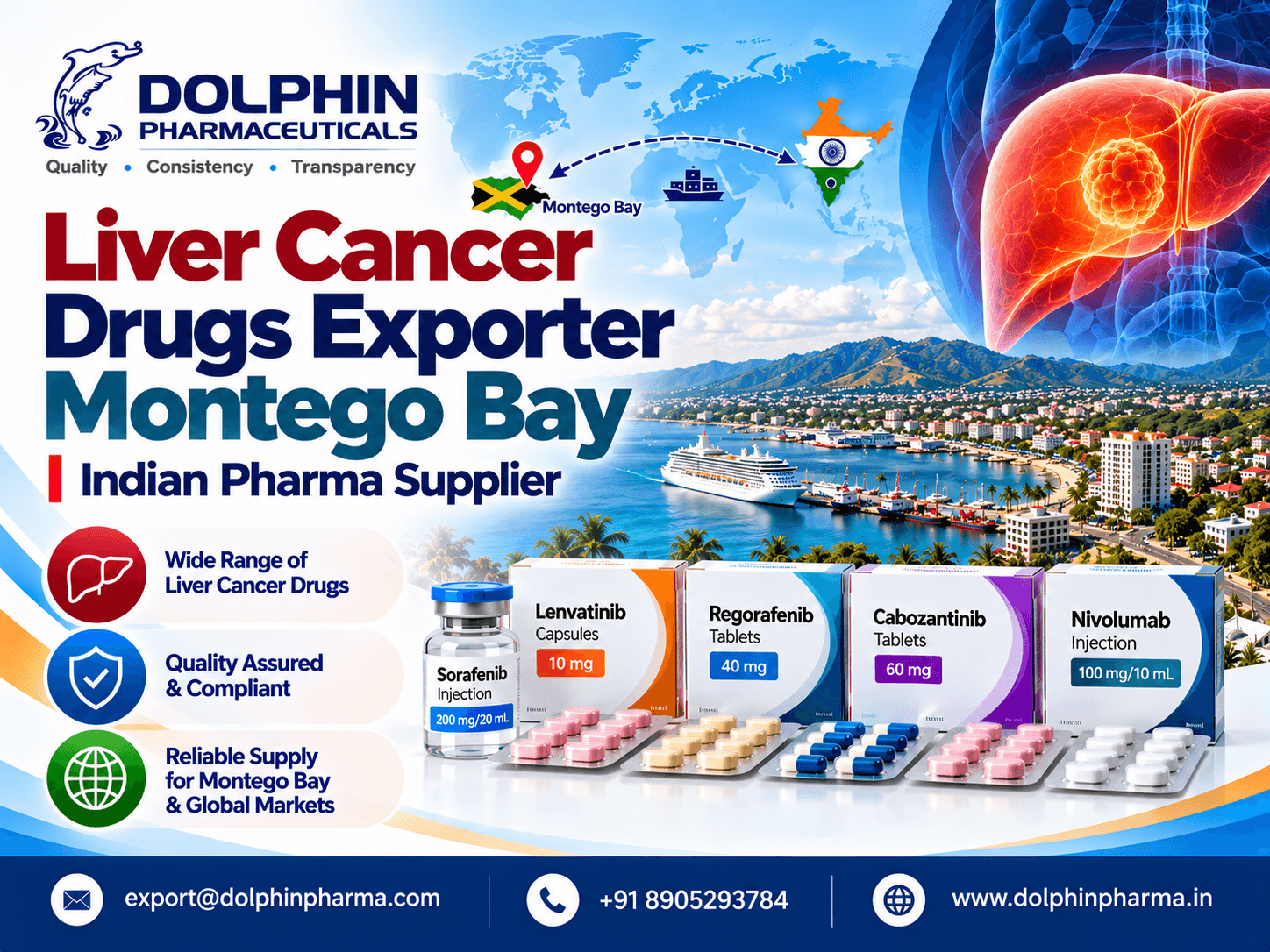
Dolphin Pharmaceuticals supports pharmaceutical sourcing enquiries and discussions concerning international supply arrangements. Buyers seeking a liver cancer drugs exporter in Montego Bay should begin by identifying the exact product required and confirming its availability, manufacturer, documentation, and eligibility for importation into Jamaica.
This guide explains how pharmaceutical buyers can evaluate Indian suppliers, prepare product enquiries, understand Jamaican import requirements, and plan responsible pharmaceutical procurement for Montego Bay and the wider Jamaican market.
1. Understanding Liver Cancer Medicines
Liver cancer medicines are not a single, uniform product category. The medicines used depend on the specific diagnosis, disease characteristics, clinical assessment, and treatment plan established by qualified healthcare professionals.
Liver cancer may include hepatocellular carcinoma and other types of primary liver cancer. Some cancers that affect the liver may also have originated in other parts of the body. The appropriate medicine therefore depends on the specific medical circumstances.
From a pharmaceutical procurement perspective, buyers may encounter several broad categories of oncology medicines:
- Targeted therapy medicines: Products designed to act on specific molecular targets involved in certain cancers.
- Immunotherapy medicines: Products that work through mechanisms involving the immune system.
- Chemotherapy medicines: Medicines used in particular cancer treatment protocols.
- Other specialist oncology products: Medicines selected according to the type of cancer and the treatment plan.
These categories are provided for general pharmaceutical sourcing information, not as treatment recommendations. Medicine selection and prescribing decisions must remain with qualified healthcare professionals.
For importers, the most important first step is to identify the exact medicine requested by the purchasing institution. A supplier should not be assumed to offer every product within the broader oncology category.
A complete enquiry should include the generic or product name, strength, dosage form, pack size, requested quantity, and any manufacturer preference.
2. Why Consider an Indian Pharma Supplier?
India is an established source of pharmaceutical products for international markets. Its pharmaceutical industry includes manufacturers and exporters serving a variety of therapeutic categories, including specialty medicines.
For Jamaican pharmaceutical buyers, an Indian supplier may be worth evaluating when the requested product, commercial terms, documentation, and destination-market requirements can be met.
However, the suitability of an exporter depends on the specific product and the supplier's actual role in the supply chain.
Manufacturer transparency
Buyers should establish whether a supplier manufactures the requested medicine directly, distributes products made by another company, or arranges sourcing through a third party. The manufacturer's legal name and relevant facility details should be verified.
Product-specific documentation
Ask which product information, quality records, batch documentation, and other supporting materials are available for the medicine being considered.
Supply planning
Discuss product availability, order quantities, estimated lead times, packaging, and the procedure for confirming an order.
Commercial clarity
Request a written quotation that specifies the product, strength, pack size, quantity, pricing basis, payment terms, and shipping responsibilities.
Destination-market awareness
Confirm that the proposed product and supply arrangement can satisfy the applicable Jamaican registration, import permit, and importer authorization requirements.
These checks help buyers make more informed sourcing decisions rather than relying solely on promotional statements or low prices.
3. How to Evaluate a Liver Cancer Drugs Exporter in Montego Bay
Choosing an international pharmaceutical supplier requires a structured evaluation process. Buyers should examine the product and the supplier separately because evidence about one does not automatically establish the suitability of the other.
Important evaluation points include:
Product identity: Confirm the medicine's generic name, brand name where relevant, strength, dosage form, and pack size.
Manufacturer information: Verify the proposed manufacturer and manufacturing site where applicable.
Quality documentation: Request documents relevant to the specific medicine and transaction, and check that they match the product being offered.
Regulatory eligibility: Establish whether the medicine is registered or otherwise approved for the intended importation into Jamaica.
Supply capability: Clarify availability, minimum order quantities if applicable, and realistic order timelines.
Communication: Ensure that product questions, documentation requests, and commercial terms receive clear responses.
A certificate or quality document should not be assumed to cover every product a supplier offers. Buyers should check its validity, scope, issuing organization, and relevance to the specific product or facility.
4. Quality Assurance and Documentation
Quality assurance is a central consideration when sourcing oncology medicines. Buyers should identify the documentation required for the exact medicine before approving an order or arranging a shipment.
Depending on the product and applicable regulatory pathway, relevant documents may include:
- Certificate of Analysis (CoA), where applicable.
- Product specifications and approved product information.
- Relevant manufacturing licences and quality certifications.
- Batch number and expiry-date details.
- Certificate of origin, where required.
- Product storage and handling instructions.
- Shipping records and temperature-monitoring information, where applicable.
The exact document set will vary. Jamaican importers should confirm the requirements with the relevant regulatory authority and their pharmaceutical supplier.
Packaging and labelling checks
Product packaging and labelling should match the applicable approved specifications and regulatory requirements. Buyers should verify medicine identification, strength, dosage form, batch details, expiry information, and storage instructions.
Any discrepancy between the purchase order, supporting documentation, and delivered product should be investigated before the product is accepted into inventory.
Traceability and recordkeeping
Pharmaceutical distributors should maintain records linking received batches to their supplier and subsequent distribution. Procedures should also be established for handling complaints, investigating suspected quality issues, and managing recalls when necessary.
Clear records help support responsible procurement and accountability throughout the pharmaceutical supply chain.
5. Jamaica's Pharmaceutical Import Requirements
Regulatory compliance is essential when sourcing liver cancer medicines for Montego Bay or other locations in Jamaica.
Jamaica's Ministry of Health & Wellness states that most pharmaceutical products require registration before importation, distribution, and sale. Its regulatory functions include product registration and import permit processing, including assessment of medicines intended for life-threatening illnesses such as cancer. The exact requirements depend on the product and its regulatory status.
Before arranging shipment, buyers should confirm:
- Product registration or approval: Determine whether the medicine is registered or otherwise approved for the intended importation.
- Import permit: Establish the applicable permit requirements and application process.
- Importer authorization: Confirm that the Jamaican importing organization meets the relevant requirements.
- Supporting documents: Prepare the product information and other records requested by the authorities.
- Customs documentation: Coordinate commercial invoices, transport documents, permit information, and other applicable paperwork.
- Product-specific conditions: Check any additional requirements relating to packaging, storage, handling, or distribution.
The Jamaica Trade Portal describes an import permit process that includes reviewing the product's registration or approval status and verifying whether the importer is authorized.
The availability of a medicine from an overseas supplier does not automatically mean that it can be imported, distributed, or sold in Jamaica. Product eligibility and the required approvals should be confirmed before dispatch.
6. Pharmaceutical Supply Coordination in Montego Bay
Montego Bay is an important commercial centre in western Jamaica. Pharmaceutical distributors and authorized buyers serving this area may need to coordinate product sourcing, regulatory documentation, transportation, inventory management, and receiving arrangements.
A well-organized procurement process begins with a clear product enquiry. The buyer should identify the exact medicine, requested quantity, destination, documentation requirements, and anticipated purchasing schedule.
For supply arrangements involving Montego Bay, buyers should consider the following:
- Confirm the authorized importing organization and receiving destination.
- Check the status of the product's regulatory requirements before shipment.
- Coordinate order schedules with the supplier and importer.
- Allow sufficient time for regulatory processing and customs clearance.
- Confirm packaging and storage requirements before dispatch.
- Record batch numbers and expiry dates when the product is received.
- Maintain procedures for delayed, damaged, or nonconforming shipments.
Actual delivery schedules depend on product availability, regulatory processing, shipping arrangements, and customs clearance. Buyers should request an order-specific estimate instead of relying on general delivery promises.
7. Storage and Transportation of Liver Cancer Medicines
Storage and transportation requirements vary by medicine. Some oncology products may require refrigeration or other temperature-controlled conditions, while others have different manufacturer-defined requirements.
Before shipment, the buyer and supplier should confirm the storage instructions for the exact product and establish a suitable logistics plan.
Important considerations include:
- Required storage temperature and permitted temperature range.
- Protection from light or other environmental factors, where specified.
- Appropriate packaging and handling procedures.
- Temperature monitoring during transit, where required.
- Procedures for delays or temperature excursions.
- Suitable storage capacity at the receiving destination.
Where a cold chain is required, planning should cover the entire journey, including transit, customs clearance, temporary storage, and final delivery.
If a shipment may have been exposed to conditions outside the permitted range, it should be assessed under the relevant quality procedures before it is released for use.
Responsible storage and transport planning helps protect product integrity and supports a more reliable supply chain.
8. Pricing and Procurement Planning
Price is an important factor when selecting a pharmaceutical supplier, but quotations should be compared using consistent product specifications and commercial terms.
Differences in manufacturer, strength, pack size, documentation, shipping arrangements, and order quantities can make direct price comparisons misleading.
A detailed quotation should identify:
- Medicine name and product specifications.
- Manufacturer and country of origin.
- Pack size and requested quantity.
- Unit price and total order value.
- Minimum order quantity, where applicable.
- Product availability and estimated lead time.
- Payment terms and quotation validity.
- Shipping and insurance responsibilities.
- Applicable documentation and additional charges.
Buyers should also clarify how order changes, product substitutions, shipment delays, and discrepancies will be handled.
The lowest-priced offer is not necessarily the most suitable. Product documentation, regulatory eligibility, manufacturer transparency, traceability, and communication should all be considered alongside cost.
9. How Dolphin Pharmaceuticals Can Support Sourcing Enquiries
Dolphin Pharmaceuticals welcomes enquiries concerning pharmaceutical sourcing and international export supply arrangements. Buyers evaluating liver cancer medicines for Jamaica can provide detailed product information to help clarify their requirements.
For a more efficient enquiry, include:
- Requested medicine name or active ingredient.
- Required strength and dosage form.
- Preferred manufacturer, if applicable.
- Pack size and estimated quantity.
- Destination: Montego Bay, Jamaica.
- Required product and quality documentation.
- Expected procurement timeline.
- Any known registration or import conditions.
These details help define the enquiry and identify the information needed for further evaluation.
Product availability, manufacturer details, documentation, pricing, shipping feasibility, and Jamaican regulatory eligibility must be confirmed individually. Buyers should also verify the proposed manufacturer's identity and the supplier's role in the transaction.
Dolphin Pharmaceuticals should not be assumed to manufacture every requested medicine or to have automatic authorization for every oncology product in Jamaica. Product-specific verification is necessary before any purchase or shipment proceeds.
10. Common Mistakes to Avoid When Choosing an Exporter
Pharmaceutical buyers can reduce avoidable procurement risks by watching for common problems.
Selecting a supplier based only on price
Compare the complete product specification, supporting documentation, regulatory suitability, and commercial terms alongside cost.
Assuming overseas availability means Jamaican approval
Confirm registration, import permit, and importer authorization requirements for the exact medicine.
Accepting incomplete documentation
Agree on the required document set before shipment and ensure that the documents correspond to the proposed product.
Failing to verify the manufacturer's identity
Clarify whether the supplier is the manufacturer, distributor, or sourcing partner, and verify the relevant details.
Overlooking storage requirements
Confirm product-specific storage and transportation instructions before arranging logistics.
Relying on unconfirmed delivery commitments
Request a realistic schedule based on availability, regulatory processing, and shipping arrangements.
Neglecting inventory management
Consider lead times, expiry dates, stock rotation, and replenishment planning when managing pharmaceutical inventory.
A consistent supplier evaluation process helps Jamaican buyers set clear expectations and make more informed procurement decisions.
Frequently Asked Questions
1. How can I find a liver cancer drugs exporter for Montego Bay?
Identify the exact medicine and its specifications, then assess potential suppliers for manufacturer transparency, quality documentation, regulatory suitability, storage requirements, and commercial terms. Confirm Jamaica's import requirements before arranging shipment.
2. Can an Indian pharmaceutical supplier export liver cancer medicines to Jamaica?
An Indian supplier may be considered if the product, manufacturer, documentation, and supply arrangement meet the buyer's requirements and applicable regulations. Eligibility for importation into Jamaica must be verified for the specific medicine before dispatch.
3. What documents should I request from a liver cancer medicine supplier?
Depending on the medicine and transaction, relevant documents may include a Certificate of Analysis, product specifications, manufacturing and quality documentation, batch and expiry information, certificate of origin, and applicable shipping records. Confirm the precise requirements with the relevant authorities.
4. Do liver cancer medicines require registration in Jamaica?
Most pharmaceutical products require registration before importation, distribution, and sale, and regulated medicines may require an import permit. Buyers should confirm the current requirements for the exact product with Jamaica's Ministry of Health & Wellness.
5. Does Dolphin Pharmaceuticals manufacture every liver cancer medicine?
Buyers should confirm the company's role for each product enquiry. A pharmaceutical supplier or exporter may work through different manufacturers or sourcing arrangements. The manufacturer and supporting product documentation should be verified individually.
6. What information should I include in an export enquiry?
Include the medicine name or active ingredient, strength, dosage form, pack size, quantity, destination, preferred manufacturer if applicable, required documentation, and expected purchasing timeline.
Conclusion
Finding a suitable liver cancer drugs exporter in Montego Bay requires careful evaluation of product specifications, manufacturer credentials, quality documentation, regulatory eligibility, storage conditions, and commercial transparency.
India provides a range of pharmaceutical sourcing options, but every proposed medicine and supply arrangement must be assessed individually. Jamaican product registration, import permit requirements, and importer authorization should be confirmed before shipment.
Dolphin Pharmaceuticals welcomes enquiries from pharmaceutical importers, distributors, and procurement teams interested in discussing pharmaceutical sourcing and export supply arrangements. Providing clear product specifications and destination requirements is a practical first step toward evaluating a suitable supply option.
For buyers serving Montego Bay and the wider Jamaican market, responsible procurement begins with product verification, transparent communication, appropriate documentation, and compliance with the applicable regulatory framework.
My Company Name - Dolphin Pharmaceuticals
My Website - https://www.dolphinpharma.in/