
Introduction
The global demand for pharmaceutical products has made reliable medicine sourcing an important priority for pharmaceutical importers, distributors, hospitals, and healthcare procurement teams. Within this sector, oncology medicines require particularly careful planning because product specifications, quality documentation, regulatory requirements, and storage conditions can vary significantly from one medicine to another.
For international buyers, establishing a reliable oncology medicine supply relationship involves more than finding a supplier with an extensive product catalogue. It requires a clear understanding of the actual manufacturer, product availability, documentation, import eligibility, shipping arrangements, and commercial terms.
India is an important source of pharmaceutical products for international markets, offering buyers access to a wide range of medicines through manufacturers, distributors, and pharmaceutical exporters. However, every supplier and product must be assessed individually to determine whether it meets the buyer's requirements and the regulations of the destination country.
A strong pharmaceutical partnership is built on transparency, consistent communication, realistic commitments, and appropriate quality controls throughout the supply chain.
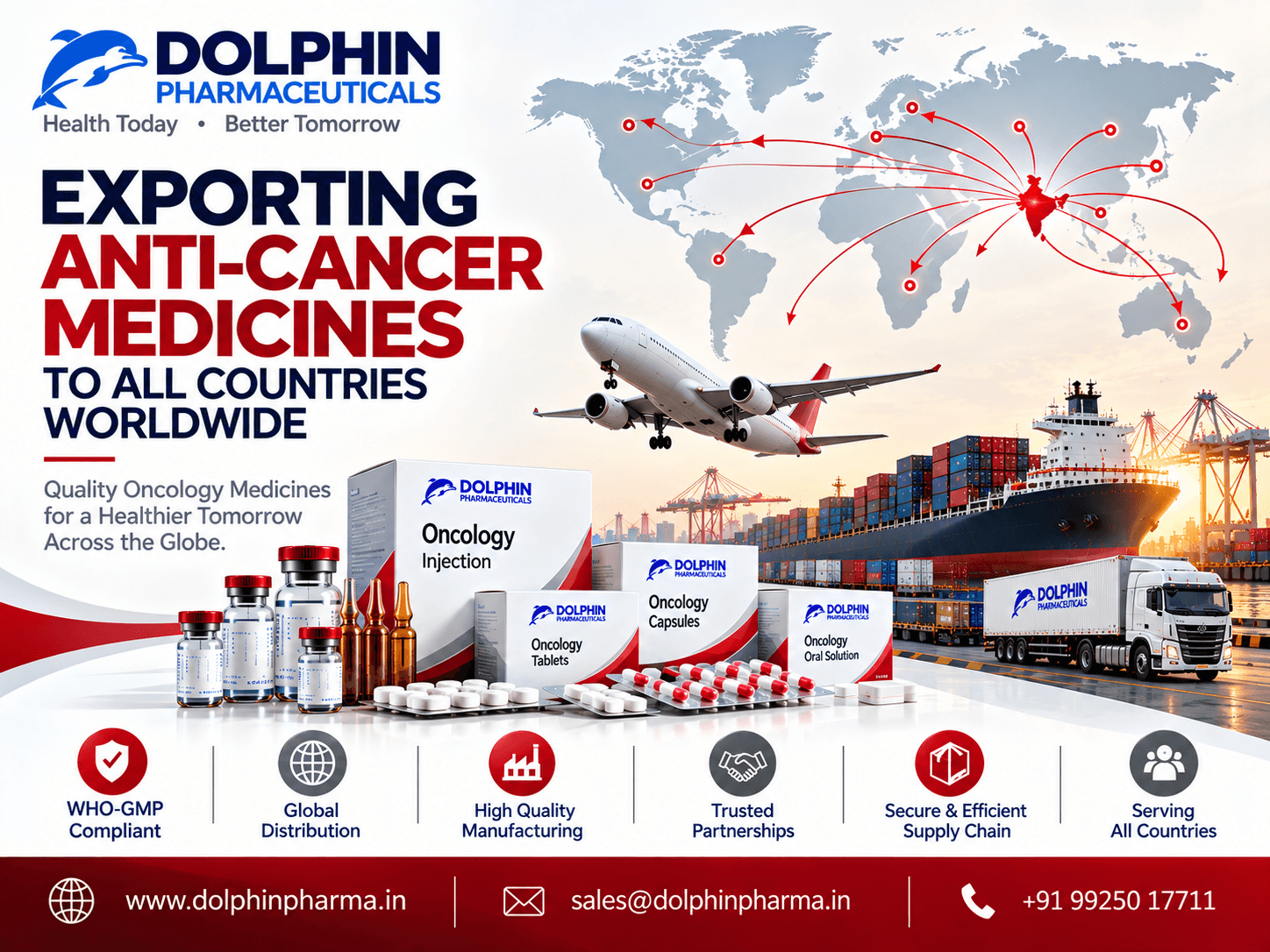
Dolphin Pharmaceuticals supports pharmaceutical sourcing enquiries through its online product catalogue, which includes selected oncology medicines. International buyers can use the catalogue as a starting point for identifying products and discussing their requirements, subject to confirmation of availability, manufacturer details, documentation, and destination-country eligibility.
This guide explains how international buyers can build reliable oncology medicine supply partnerships and what to consider when selecting a pharmaceutical sourcing partner from India.
1. Understanding Global Oncology Medicine Supply
Global oncology medicine supply involves the sourcing, verification, documentation, transportation, and distribution of medicines used in cancer care. Depending on the product and market, the supply chain may involve manufacturers, exporters, importers, distributors, logistics providers, and healthcare procurement organisations.
Each participant has specific responsibilities. Manufacturers produce medicines under applicable manufacturing and quality requirements, while exporters and distributors may coordinate sourcing, commercial transactions, documentation, and shipment arrangements.
For international buyers, understanding this structure helps clarify who is responsible for each part of the transaction.
A dependable oncology supply arrangement should address:
- Product identification and manufacturer verification.
- Applicable quality and regulatory documentation.
- Product availability and realistic lead times.
- Appropriate storage and transportation.
- Import requirements in the destination market.
- Clear commercial terms and order coordination.
- Procedures for handling complaints and discrepancies.
The aim is to create a transparent and manageable sourcing process rather than relying on product listings or price quotations alone.
2. Why Reliable Pharmaceutical Partnerships Matter
A reliable pharmaceutical partnership can help buyers organise procurement, reduce avoidable communication problems, and establish clearer expectations for future orders.
For importers and distributors, uncertainty about product specifications, documentation, or dispatch timelines can complicate purchasing decisions. A supplier that communicates clearly and confirms important details in writing can help make the process more manageable.
The benefits of a well-organised partnership may include:
Better procurement planning: Clear product details and estimated lead times help buyers plan purchase orders and inventory.
Improved documentation coordination: Identifying required documents early can reduce avoidable delays and requests for corrections.
Greater product transparency: Confirming the manufacturer, strength, dosage form, and packaging helps ensure the proposed product matches the buyer's requirements.
More effective communication: Defined responsibilities make it easier to manage questions, changes, and shipment updates.
Consistent purchasing processes: Documented product specifications and order procedures can support repeat procurement.
These benefits depend on the actual supplier's capabilities and the quality of the working relationship. Buyers should review performance over time and continue to verify product and shipment details for every order.
3. Choose a Supplier with Clear Product and Manufacturer Information
Manufacturer transparency is a fundamental consideration when sourcing oncology medicines internationally.
A pharmaceutical exporter may supply medicines manufactured by third-party companies. This is different from manufacturing the products directly, and buyers should understand the arrangement before proceeding.
For each requested medicine, confirm:
- Generic name or active pharmaceutical ingredient.
- Brand name, where applicable.
- Strength and dosage form.
- Packaging configuration and pack size.
- Actual manufacturer and relevant manufacturing location.
- Applicable product registration or marketing authorisation information.
- Storage conditions specified for the product.
For example, a buyer looking for capecitabine tablets, lenalidomide capsules, or abiraterone acetate tablets should verify the exact product and manufacturer instead of relying on a general oncology product category.
If the supplier offers an alternative brand, manufacturer, strength, or pack size, the buyer should review and approve the change before the order is finalised. Any alternative must also satisfy the destination country's regulatory requirements.
A supplier that provides clear product information helps buyers conduct appropriate checks and maintain accurate purchasing records.
4. Make Quality Assurance a Priority
Quality assurance should be part of every pharmaceutical sourcing decision. It includes more than checking a label or receiving a certificate: it involves assessing the relevant manufacturer, product documentation, handling arrangements, and traceability.
The World Health Organization provides guidance on Good Manufacturing Practices (GMP) and good distribution practices for pharmaceutical products. These frameworks address different stages of the supply chain, including manufacturing, storage, transportation, documentation, complaints, and recalls. <Cite refs={["turn479856search2","turn479856search0"]}/>
When evaluating an oncology medicine supplier, buyers should ask which quality documents are available for the specific product and transaction.
Depending on the applicable requirements, these may include:
- Relevant manufacturer and licence information.
- Applicable GMP documentation.
- Product specifications.
- Certificate of Analysis (CoA), where applicable.
- Batch-specific quality records.
- Product registration or marketing authorisation documents, where required.
The exact requirements vary by product and destination. Buyers should verify that the documents relate to the actual manufacturer and product being supplied.
A certificate should not be treated as an automatic guarantee of every aspect of product quality. It should be considered alongside other evidence, including product identity, traceability, appropriate storage, and the supplier's ability to address quality-related questions.
5. Understand Regulatory Compliance Across Markets
Pharmaceutical regulations differ between countries. A medicine that can be supplied from India is not automatically authorised for import, distribution, or sale in every destination market.
International buyers should identify the requirements that apply to their specific product and country before confirming an order.
These may include:
- Product registration or marketing authorisation.
- Import permits and other regulatory approvals.
- Importer or distributor licences.
- Approved packaging and labelling.
- Export permissions applicable to the product.
- Customs and shipping documentation.
- Additional restrictions for particular medicines.
Buyers should confirm the applicable requirements with the destination country's medicines regulator or a qualified regulatory adviser. They should also establish which documents the supplier and actual manufacturer can provide.
A responsible supplier should explain its role in the transaction and be transparent about documentation availability. However, the buyer should not rely on a general assurance that a product can be exported as proof that it can legally enter the destination market.
Clear regulatory checks before ordering can help reduce the risk of documentation problems, shipment delays, or a product being unsuitable for the intended market.
6. Build a Clear and Complete Documentation Process
Accurate documentation supports product identification, commercial transactions, regulatory checks, and supply-chain traceability.
For international oncology medicine orders, documents may fall into three broad categories.
Commercial documentation
Depending on the transaction, this may include:
- Pro forma invoice.
- Purchase order.
- Commercial invoice.
- Packing list.
- Applicable shipping or transport documents.
- Certificate of origin, where required.
Product descriptions, quantities, pack sizes, and other relevant details should be consistent across the applicable documents.
Product and quality documentation
Depending on the medicine and market, this may include a CoA, product specifications, relevant manufacturer information, batch records, and applicable quality or registration documents.
Buyers should confirm which documents are necessary before the order is dispatched.
Regulatory documentation
This may include applicable export permissions, import permits, product approvals, or additional documents requested by the relevant authorities.
Not every document is mandatory for every shipment. The appropriate checklist depends on the specific medicine, transaction, and destination country.
A useful practice is to agree on the required documents before confirming the order, identify who will provide each document, and check that the final paperwork matches the agreed product and shipment.
7. Coordinate Storage, Packaging, and Transportation
Product quality must be maintained throughout the supply chain, not just during manufacturing.
Different oncology medicines have different storage and transportation requirements. Some products require specified room-temperature conditions, while others may require refrigerated transportation or additional handling precautions.
Before dispatch, the buyer and supplier should confirm:
- The manufacturer's specified storage conditions.
- Suitable packaging for the medicine and shipping route.
- Transportation arrangements and expected transit time.
- Temperature monitoring requirements, where applicable.
- Shipment tracking and communication procedures.
- Records required at receipt.
- Procedures for dealing with damaged packaging or temperature excursions.
Do not assume that every oncology medicine needs refrigeration. Requirements should be confirmed for the individual product.
For temperature-sensitive medicines, the parties should establish responsibility for maintaining the required conditions throughout the journey. The receiving organisation should also have procedures for reviewing the shipment and responding to any suspected handling issue.
Good transportation coordination helps buyers plan the receiving process and maintain the records needed for quality management.
8. Improve Communication and Order Coordination
Communication is one of the practical foundations of a reliable pharmaceutical partnership.
International orders can involve multiple parties, time zones, regulatory checks, and shipping arrangements. Clear communication helps all participants understand what has been agreed and what needs to happen next.
Before placing an order, buyers should confirm:
- Whether the requested product is available or must be sourced.
- The exact specifications and quantity.
- The estimated lead time.
- The documents that will be provided.
- The quotation's validity and payment terms.
- The shipping arrangements and responsibilities.
- How updates and potential delays will be communicated.
Written confirmation is particularly important when product specifications or commercial terms change.
For example, if a manufacturer, brand, pack size, or delivery estimate changes, the buyer should receive the updated information and approve any material change before proceeding.
No supplier can eliminate every supply-chain delay. However, realistic commitments and timely communication can help buyers make better purchasing decisions and manage their expectations.
9. Balance Pricing with Long-Term Supply Reliability
Competitive pricing can be important for pharmaceutical importers and distributors, but price should be assessed alongside product suitability and the complete supply arrangement.
When comparing quotations, check whether they cover the same:
- Active ingredient, strength, and dosage form.
- Manufacturer and brand.
- Packaging and order quantity.
- Documentation requirements.
- Shipping and insurance arrangements.
- Payment and delivery terms.
A lower quotation may relate to a different product specification or exclude costs included in another offer. Buyers should compare equivalent terms before selecting a supplier.
It is also sensible to investigate unusually low offers when product origin, manufacturer details, or documentation cannot be adequately verified.
A sustainable partnership depends on clear commercial terms and reliable coordination—not simply the lowest initial price.
10. Develop a Long-Term Pharmaceutical Partnership
A long-term relationship should be built on documented processes, clear expectations, and regular review.
International buyers can strengthen their procurement practices by:
- Establishing approved product specifications and manufacturer details.
- Agreeing on documentation requirements before each order.
- Recording commercial terms and delivery expectations.
- Reviewing product and shipment records at receipt.
- Monitoring communication and order performance.
- Documenting and investigating complaints or discrepancies.
- Reviewing regulatory requirements when products or destination markets change.
Buyers should also maintain appropriate internal procedures for receiving, storing, and distributing medicines.
Repeat business should not replace verification. Product availability, batch information, documentation, and regulatory eligibility should be confirmed for each relevant shipment.
These practices help both parties maintain clarity and address potential issues in a structured manner.
11. Exploring Global Oncology Medicine Sourcing with Dolphin Pharmaceuticals
For international buyers researching oncology medicine suppliers in India, an online product catalogue can be a useful starting point for identifying products and preparing specific enquiries.
Dolphin Pharmaceuticals provides a pharmaceutical product catalogue that lists selected oncology medicines alongside information such as product names, strengths, dosage forms, packaging, and manufacturer details for listed items.
Buyers considering a sourcing enquiry should confirm:
- Current availability of the requested medicine.
- Actual manufacturer and exact product specification.
- Applicable quality and export documentation.
- Eligibility for import into the destination country.
- Order quantity, pricing, and estimated lead time.
- Required storage, packaging, and transportation arrangements.
A catalogue listing does not guarantee that a product is currently available or authorised for every destination market.
To make an enquiry more useful, international buyers can provide the medicine name, strength, dosage form, destination country, and requested quantity. These details help establish the scope of the requirement and identify the product-specific checks needed before a transaction proceeds.
Dolphin Pharmaceuticals can be considered as a potential sourcing contact, subject to the buyer's verification of product information, applicable documentation, and commercial terms.
12. International Buyer Checklist for Reliable Oncology Supply
Use this checklist when assessing a potential pharmaceutical partner:
- Verify the supplier's business identity and applicable authorisations.
- Identify the actual manufacturer of the requested medicine.
- Confirm the active ingredient, strength, dosage form, and packaging.
- Review applicable quality and batch documentation.
- Check regulatory and import requirements for the destination country.
- Confirm storage, packaging, and shipping arrangements.
- Agree on commercial terms and realistic lead times.
- Identify who will provide each required document.
- Establish procedures for shipment updates and order changes.
- Clarify the process for handling complaints and discrepancies.
- Confirm all product and commercial details in writing before dispatch.
This checklist provides a starting point. Additional controls may be necessary depending on the product, destination market, and buyer's own quality and regulatory responsibilities.
Frequently Asked Questions (FAQs)
1. What makes an oncology medicine supply partnership reliable?
A reliable partnership is built on transparent manufacturer information, verified product specifications, appropriate documentation, regulatory awareness, realistic lead times, suitable transportation arrangements, and clear communication.
2. Why is India an important sourcing destination for pharmaceutical products?
India has an established pharmaceutical industry and a significant role in international pharmaceutical trade. Buyers may explore Indian suppliers for access to a range of medicines, but each product and supplier should be assessed individually.
3. What documents should international buyers request?
Depending on the medicine and destination, documents may include commercial invoices, packing lists, shipping documents, applicable export and import permissions, product registration information, and relevant quality documentation such as a CoA.
4. How can buyers assess an oncology supplier's quality practices?
Confirm the actual manufacturer, review relevant licences and quality documents, verify product and batch information where applicable, and assess the supplier's approach to traceability, storage, complaints, and discrepancies.
5. Does a product catalogue guarantee availability for export?
No. A catalogue is an initial reference. Buyers should confirm current availability, manufacturer details, documentation, commercial terms, and import eligibility for the specific product and destination.
6. How can international buyers contact Dolphin Pharmaceuticals about oncology products?
Review the company's online product catalogue and enquire with the requested medicine name, strength, dosage form, destination country, and quantity. Confirm the relevant product, documentation, and commercial details before placing an order.
Conclusion
Global oncology medicine supply depends on more than product availability. Reliable pharmaceutical partnerships require manufacturer transparency, quality verification, accurate documentation, regulatory compliance, suitable transportation, and consistent communication.
For international buyers, a structured procurement process can help clarify responsibilities, support informed purchasing decisions, and reduce avoidable supply-chain problems. Every product and shipment should be assessed against the applicable requirements rather than relying solely on a supplier's catalogue or general claims.
Looking for a pharmaceutical sourcing partner for oncology products from India? Dolphin Pharmaceuticals welcomes enquiries from international pharmaceutical buyers, licensed importers, distributors, and procurement teams. Share your required medicine, strength, dosage form, destination country, and quantity to discuss potential availability, documentation, and commercial terms.
Build your pharmaceutical supply partnerships around verified information, transparent communication, and clear expectations.
My Company Name - Dolphin Pharmaceuticals
My Website - https://www.dolphinpharma.in/