Introduction
The pharmaceutical export industry plays an important role in connecting medicine suppliers with international markets. For pharmaceutical importers, wholesalers, distributors, and healthcare procurement organisations, India offers opportunities to explore a wide range of pharmaceutical products, including selected anti-cancer and oncology medicines.
However, sourcing oncology medicines internationally requires careful planning. Buyers must evaluate the supplier, verify the actual manufacturer, review product documentation, understand destination-country regulations, and confirm shipping and storage requirements before placing an order.
For businesses searching for pharmaceutical export from India, choosing a suitable sourcing partner is about more than finding a competitive price. It involves establishing a transparent procurement process that supports product verification, regulatory compliance, and clear commercial communication.
Dolphin Pharmaceuticals, based in Surat, Gujarat, India, provides an online pharmaceutical product catalogue that includes selected anti-cancer and oncology medicines. International buyers can use the catalogue as a starting point for product enquiries and then confirm the relevant availability, manufacturer details, documentation, and export eligibility.
This guide explains how pharmaceutical importers can approach the sourcing of anti-cancer medicines from India, what to check before confirming an order, and how a well-organised supplier relationship can support international pharmaceutical procurement.
1. Understanding Pharmaceutical Exports from India
India has an established pharmaceutical industry serving domestic and international markets. Its pharmaceutical ecosystem includes manufacturers, finished-formulation suppliers, distributors, and export-oriented businesses serving different procurement requirements.
According to India's Ministry of Commerce and Industry, pharmaceutical exports reached approximately US$30.47 billion in the 2024–25 financial year. This demonstrates the scale of India's participation in international pharmaceutical trade.
For international buyers, the Indian market provides an opportunity to investigate different pharmaceutical products, manufacturers, formulations, and commercial arrangements. Nevertheless, the suitability of a supplier depends on the specific product, the buyer's requirements, and the regulations governing the destination market.
When sourcing medicines from India, importers should distinguish between three important roles:
- Manufacturer: The company that produces the medicine.
- Supplier or exporter: The business arranging the supply and potentially handling export coordination.
- Importer or distributor: The business responsible for bringing the product into the destination market and meeting applicable local obligations.
These roles may involve different organisations. Therefore, buyers should establish exactly who manufactures the product and which business is responsible for each part of the transaction.
2. Why International Buyers Explore India for Oncology Medicines
Oncology medicine procurement requires detailed product identification, careful documentation, and coordination between commercial and regulatory teams.
International pharmaceutical buyers may consider Indian suppliers for several reasons.
A broad pharmaceutical product ecosystem
India's pharmaceutical sector includes businesses supplying multiple therapeutic categories, including selected oncology formulations. This can help importers investigate product options that match their market requirements.
Access to different manufacturers and brands
The same active ingredient may be available in different brands, strengths, formulations, or packaging configurations. Buyers should compare these details carefully and verify the acceptability of the proposed product in their destination market.
Opportunities for organised sourcing
An export-oriented supplier can provide a point of contact for product enquiries, quotations, documentation discussions, and shipment coordination, depending on the services it offers.
Potential for long-term procurement partnerships
When product requirements, commercial terms, and responsibilities are clearly documented, buyers and suppliers can develop more organised procurement relationships.
India's manufacturing scale does not mean every medicine is available for export to every country. Product-specific regulatory status, manufacturer arrangements, supply availability, and local import rules must always be checked.
3. Sourcing Anti-Cancer and Oncology Medicines from India
Anti-cancer and oncology medicines cover a diverse range of products. Each product has its own specifications, storage requirements, documentation needs, and regulatory considerations.
For this reason, importers should prepare a detailed product enquiry instead of relying only on a broad request for cancer medicines.
A useful enquiry should include:
- Generic or active ingredient name
- Required brand, where applicable
- Strength and dosage form
- Packaging configuration
- Required quantity
- Destination country
- Manufacturer preference, if any
- Applicable registration and import requirements
- Required documentation
- Expected delivery schedule
For example, an enquiry for an oral oncology medicine should specify its strength and packaging. An enquiry for an injectable product should also address its presentation and any relevant storage or transportation requirements.
Providing complete details helps the supplier understand the request and identify any outstanding questions before preparing a quotation.
4. Exploring Oncology Products Through Dolphin Pharmaceuticals
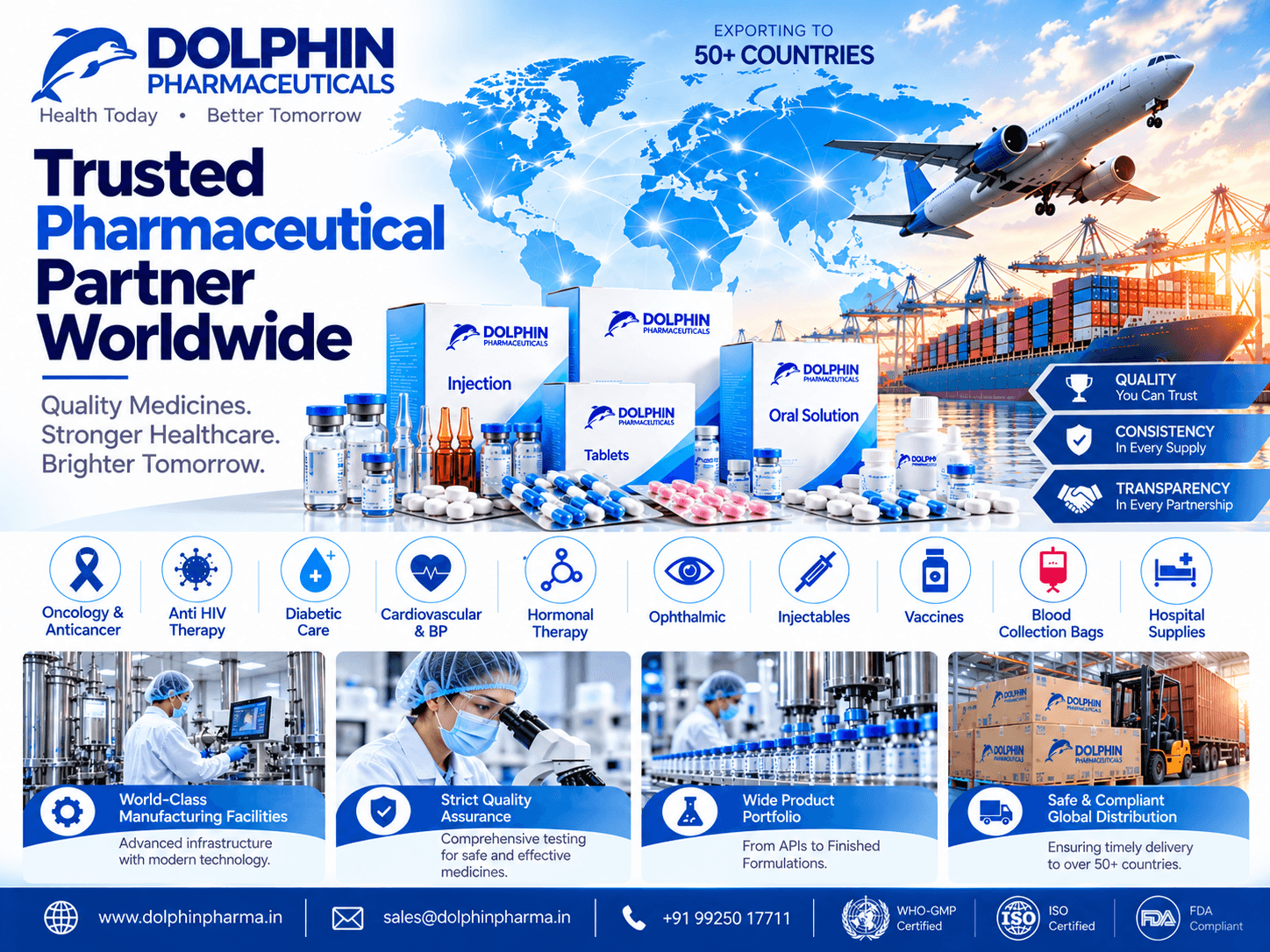
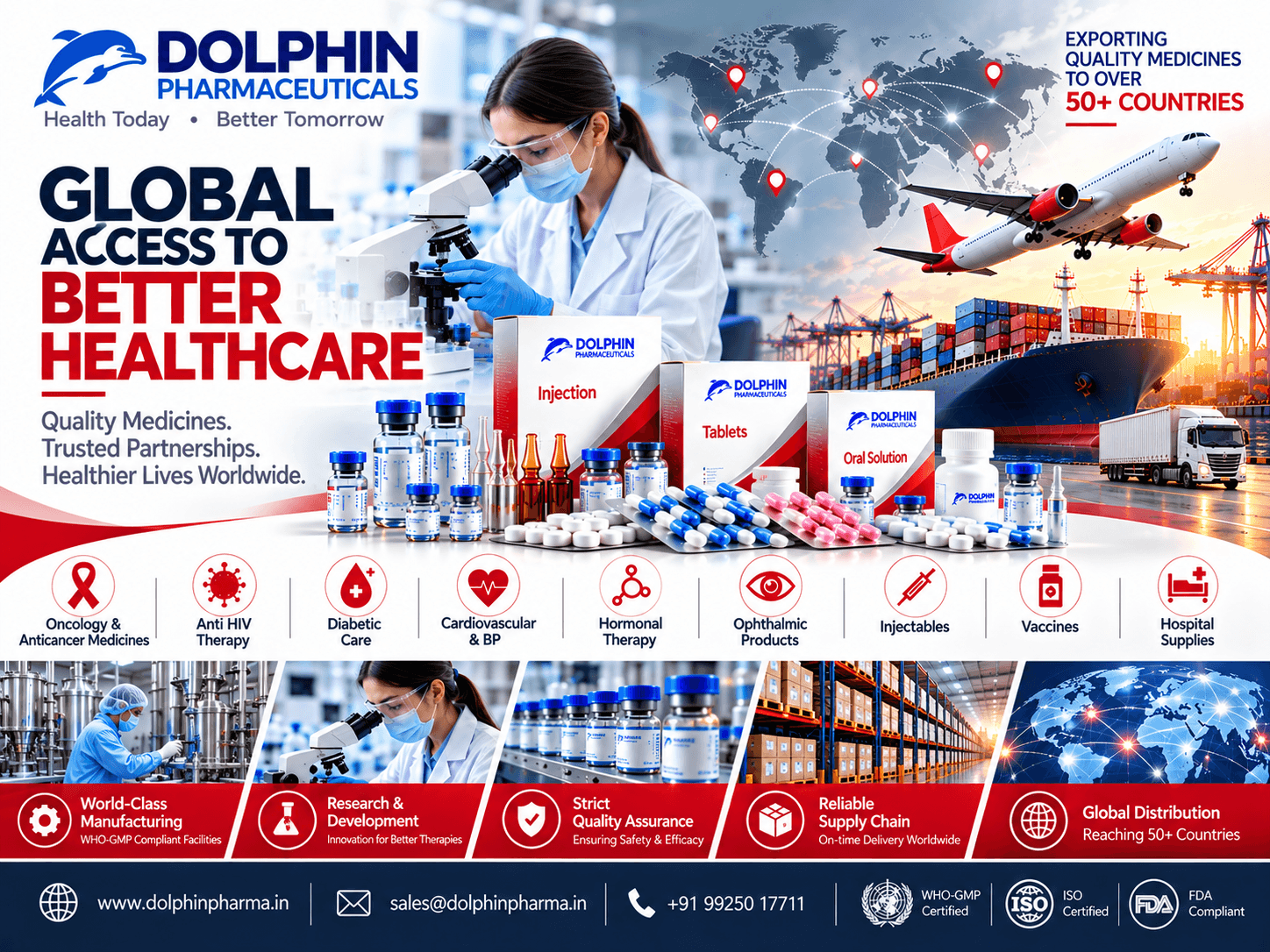
Dolphin Pharmaceuticals operates from Surat, Gujarat, India, and maintains an online catalogue featuring pharmaceutical products across several categories, including Anti-Cancer & Oncology.
Its published catalogue includes selected products such as capecitabine, cabozantinib, carboplatin, olaparib, abiraterone acetate, and other oncology-related medicines.
These examples can help buyers identify products for further enquiry. However, a catalogue listing alone does not confirm present stock, a specific export destination's approval, or the availability of all requested strengths and packaging options.
International buyers should confirm the following directly before proceeding:
- Whether the requested product is currently available for supply.
- The actual manufacturer and exact product specifications.
- Whether the proposed product can legally be exported and imported into the destination market.
- Which quality and regulatory documents can be provided.
- The applicable quotation, order quantity, and delivery timeline.
- The storage and shipping arrangements required for the product.
Dolphin Pharmaceuticals can be approached with a detailed product list so that the relevant requirements can be discussed and assessed.
5. How to Evaluate an Indian Pharmaceutical Exporter
Choosing an exporter is an important step in international pharmaceutical procurement. Buyers should conduct appropriate checks before making a commercial commitment.
Verify business information
Review the supplier's official website, business contact details, product portfolio, and stated role in the pharmaceutical supply chain. Where appropriate, conduct independent business verification.
Identify the actual manufacturer
Do not assume that a supplier manufactures every medicine shown in its catalogue. Ask for the manufacturer's name and verify the information through suitable channels.
Review product-specific documentation
Request the documents relevant to the medicine and destination market. Check that the product name, strength, manufacturer, and other details are consistent across the documentation.
Assess communication and transparency
A suitable sourcing partner should communicate clearly about what is confirmed, what remains subject to verification, and which requirements must be met before dispatch.
Examine commercial terms
Review the quotation, payment arrangements, order quantities, delivery responsibilities, shipping costs, and any other conditions relevant to the proposed transaction.
Confirm supply arrangements
Ask whether the requested quantity and lead time have been confirmed. Do not treat a preliminary indication as a guaranteed supply commitment.
These checks help importers compare suppliers using more than price alone and establish a clearer understanding of the proposed transaction.
6. Quality Assurance and Product Documentation
Quality assurance is central to pharmaceutical sourcing, particularly for medicines used in oncology treatment.
Importers should identify the documentation required for the exact product, manufacturer, and destination country. Requirements can differ depending on the product category, registration status, and local regulations.
Depending on the transaction, relevant documentation may include:
- Product specifications and manufacturer information
- Applicable manufacturing and quality certificates
- Batch-specific quality documentation
- Certificate of analysis, where applicable
- Product registration or marketing authorisation information
- Import permits or licences
- Certificates or declarations required by the importing authority
- Commercial invoice and packing list
- Shipping and transport documentation
Not every document applies to every medicine or transaction. Buyers should prepare a product-specific checklist and confirm the requirements with the relevant regulatory authority or a qualified regulatory professional.
They should also check the authenticity, validity, and applicability of the documents rather than relying solely on a supplier's assurance.
In India, pharmaceutical exports are subject to applicable legal and regulatory requirements. Certain products or circumstances may involve additional procedures. Importers should verify whether any special authorisation or export documentation is required before confirming a shipment.
Important: A product's presence in a supplier's catalogue does not, by itself, establish that the medicine is approved for use or distribution in the importing country.
7. Destination-Country Regulations and Import Requirements
International pharmaceutical trade involves regulations in both the exporting and importing countries.
A medicine that can be supplied in one market may have different registration, labelling, import, or distribution requirements in another. Buyers must therefore assess the destination market before placing an order.
Key considerations include:
Product registration
Confirm whether the medicine requires local registration, marketing authorisation, or another form of regulatory approval.
Importer licensing
Determine whether the importing organisation must hold a pharmaceutical import licence or other relevant authorisation.
Labelling and packaging
Check whether local rules specify particular labelling, language, packaging, or product-information requirements.
Product-specific permissions
Some medicines may be subject to additional controls or approvals. These must be assessed individually.
Customs and shipment documentation
Confirm the commercial and transport documents required for customs clearance and the importer's internal records.
Distribution requirements
Determine whether local rules impose conditions on storage, distribution, recordkeeping, or post-import handling.
Importers should consult the relevant national medicines regulator and customs authority. The exporter and importer should agree on document responsibilities before dispatch so that the transaction is not delayed by missing information.
8. Packaging, Storage, and International Shipping
The safe handling of pharmaceutical products continues throughout the supply chain. Product-specific storage instructions must be followed during preparation, dispatch, transportation, customs clearance, and receipt.
Different oncology medicines may have different storage requirements. Some products may require refrigerated transport, while others may be stored under specified controlled room-temperature conditions.
Before shipment, buyers should confirm:
- Storage temperature and handling instructions
- Packaging configuration and product presentation
- Applicable shelf-life requirements
- Whether temperature-controlled transportation is necessary
- Estimated transit time and shipping route
- Insurance and shipping responsibilities
- Customs-clearance arrangements
- Required shipment documentation
For products that require temperature control, the parties should establish appropriate transportation arrangements in advance. Any applicable monitoring, packaging, or handling procedures should be agreed upon and followed.
Buyers should also clarify how shipping delays or other unexpected events will be managed.
A clear logistics plan helps both parties understand their responsibilities and reduces avoidable uncertainty during international procurement.
9. Pricing and Supply Planning for Pharmaceutical Importers
Price is an important commercial consideration, but a low quotation should not be the only factor in selecting a pharmaceutical supplier.
Importers should compare quotations on a like-for-like basis, ensuring that each offer refers to the same product specifications, manufacturer requirements, quantity, packaging, and delivery conditions.
A structured price evaluation should include the following.
Product cost: Confirm the exact medicine, strength, dosage form, and pack size.
Order quantity: Clarify minimum order requirements and whether the requested quantity can be supplied.
Documentation costs: Ask whether any applicable documentation or certification expenses are included or charged separately.
Freight and insurance: Establish the shipping method, transport costs, and responsibility for insurance.
Delivery terms: Clarify the agreed shipping conditions and which party is responsible for each stage.
Lead time: Request an estimate covering order confirmation, preparation, documentation, and dispatch.
Repeat procurement: If future orders are anticipated, discuss expected volumes and planning arrangements without assuming that future prices or availability are guaranteed.
A complete commercial assessment enables buyers to compare the overall procurement cost and make more informed decisions.
10. Building a Long-Term Relationship with an Oncology Medicine Supplier
Reliable pharmaceutical procurement depends on cooperation between the supplier and the importing organisation.
Both parties benefit when expectations are clear, information is accurate, and changes are communicated promptly.
International buyers can support a productive relationship by providing complete product specifications, sharing destination-market requirements early, and confirming realistic quantities and delivery schedules.
Suppliers can support the process through clear quotations, accurate manufacturer information, timely updates, and transparent communication about outstanding requirements.
A long-term relationship should be based on:
- Consistent communication
- Verifiable product information
- Clear documentation responsibilities
- Realistic delivery commitments
- Agreed commercial terms
- Appropriate handling and shipping arrangements
- Prompt discussion of changes or delays
These practices can make repeat procurement more organised, provided the required products remain available and all applicable regulatory conditions are satisfied.
For pharmaceutical importers, the objective is not simply to identify a supplier for one order. It is to establish a sourcing process that can be reviewed, verified, and improved over time.
11. How to Request an Oncology Medicine Export Quotation
A well-prepared enquiry helps the supplier assess the requirement and identify any outstanding questions.
Step 1: Prepare the product list. Include the generic name, strength, dosage form, brand preference, and quantity.
Step 2: Identify the destination market. Specify the country where the medicines will be imported and distributed.
Step 3: Share regulatory requirements. Provide any known registration, import permit, labelling, or documentation requirements.
Step 4: Request a written quotation. Ask for product details, manufacturer information, price, order quantity, availability, and estimated lead time.
Step 5: Review the supporting documents. Verify the relevant product and manufacturer information and confirm that the proposed transaction meets applicable requirements.
Step 6: Agree on shipping arrangements. Confirm packaging, storage, freight, insurance, and document responsibilities.
Step 7: Finalise the order. Proceed only after the relevant product, regulatory, commercial, and logistics details have been reviewed and agreed upon.
Following a structured process helps buyers reduce misunderstandings and improves the clarity of international sourcing discussions.
Frequently Asked Questions
1. Why do pharmaceutical importers source medicines from India?
India has an established pharmaceutical industry with manufacturers, suppliers, and exporters serving international markets. Buyers can investigate product options and sourcing arrangements, subject to the relevant product and destination-market requirements.
2. Does Dolphin Pharmaceuticals offer anti-cancer and oncology medicines?
Dolphin Pharmaceuticals' published online catalogue includes an Anti-Cancer & Oncology category and selected oncology product listings. Buyers should contact the company to confirm current availability, exact product specifications, manufacturer details, and export eligibility.
3. What details are needed to request an oncology medicine quotation?
Provide the generic name, strength, dosage form, required quantity, destination country, preferred brand or manufacturer, and known documentation requirements. Complete details help the supplier assess the enquiry.
4. What documents are required to export oncology medicines from India?
The requirements depend on the product and destination market. They may include product and manufacturer information, applicable quality documents, regulatory approvals, import permits, invoices, packing lists, and shipping records. Confirm the exact requirements with the relevant authorities.
5. Can all oncology medicines be exported to every country?
No. Export and import eligibility depends on applicable regulations, the product's status, and the requirements of the destination country. Buyers should verify eligibility before confirming an order.
6. How can I verify an Indian pharmaceutical supplier?
Review the supplier's business information, establish the actual manufacturer, check product-specific documents, clarify the supplier's role, and confirm commercial and regulatory requirements. Use independent verification where appropriate.
7. Can I request bulk quantities of anti-cancer medicines?
You can submit the requested quantities for assessment. Minimum order quantities, stock availability, pricing, and lead times must be confirmed for the specific product and transaction.
8. What should buyers consider before shipping oncology medicines internationally?
Confirm the product's eligibility, storage requirements, packaging, shelf life, transportation conditions, required documents, customs arrangements, and the responsibilities of both parties.
Conclusion: A Structured Approach to Pharmaceutical Export from India
Sourcing anti-cancer and oncology medicines internationally requires more than identifying a product and requesting a quotation. Pharmaceutical importers must assess supplier credibility, verify the manufacturer, review quality documentation, understand destination-country regulations, and plan international logistics.
India offers a substantial pharmaceutical sourcing ecosystem, but every product and market must be evaluated individually. Transparent communication, accurate documentation, and clearly defined commercial responsibilities help importers make informed procurement decisions.
Dolphin Pharmaceuticals, based in Surat, Gujarat, India, welcomes enquiries from international pharmaceutical importers, distributors, and procurement teams interested in exploring its published pharmaceutical portfolio, including selected oncology medicines.
Looking for an Indian pharmaceutical sourcing partner for anti-cancer and oncology medicines? Prepare your product list, required quantities, destination country, and documentation requirements, and contact Dolphin Pharmaceuticals to discuss your enquiry.
Product availability, manufacturer details, pricing, and export eligibility must be confirmed for each request and remain subject to applicable regulations.
My Company Name - Dolphin Pharmaceuticals
My Website - https://www.dolphinpharma.in/