
Introduction
The international pharmaceutical supply chain depends on trusted business relationships, accurate product information, and well-organised logistics. For pharmaceutical importers, distributors, wholesalers, and healthcare procurement teams, selecting the right anti-cancer medicine export partner is an important step toward establishing a dependable sourcing process.
Anti-cancer and oncology medicines require particular attention during procurement. Buyers must verify the actual manufacturer, confirm product specifications, review relevant quality documentation, understand destination-country regulations, and ensure that storage and transportation requirements can be met.
Choosing an export partner based only on price can create unnecessary uncertainty. A more effective approach is to assess the complete supply arrangement, including product availability, regulatory requirements, commercial transparency, communication, and delivery planning.
India is an important participant in the global pharmaceutical industry, offering international buyers opportunities to explore products from different manufacturers and suppliers. However, every medicine and destination market must be evaluated individually.
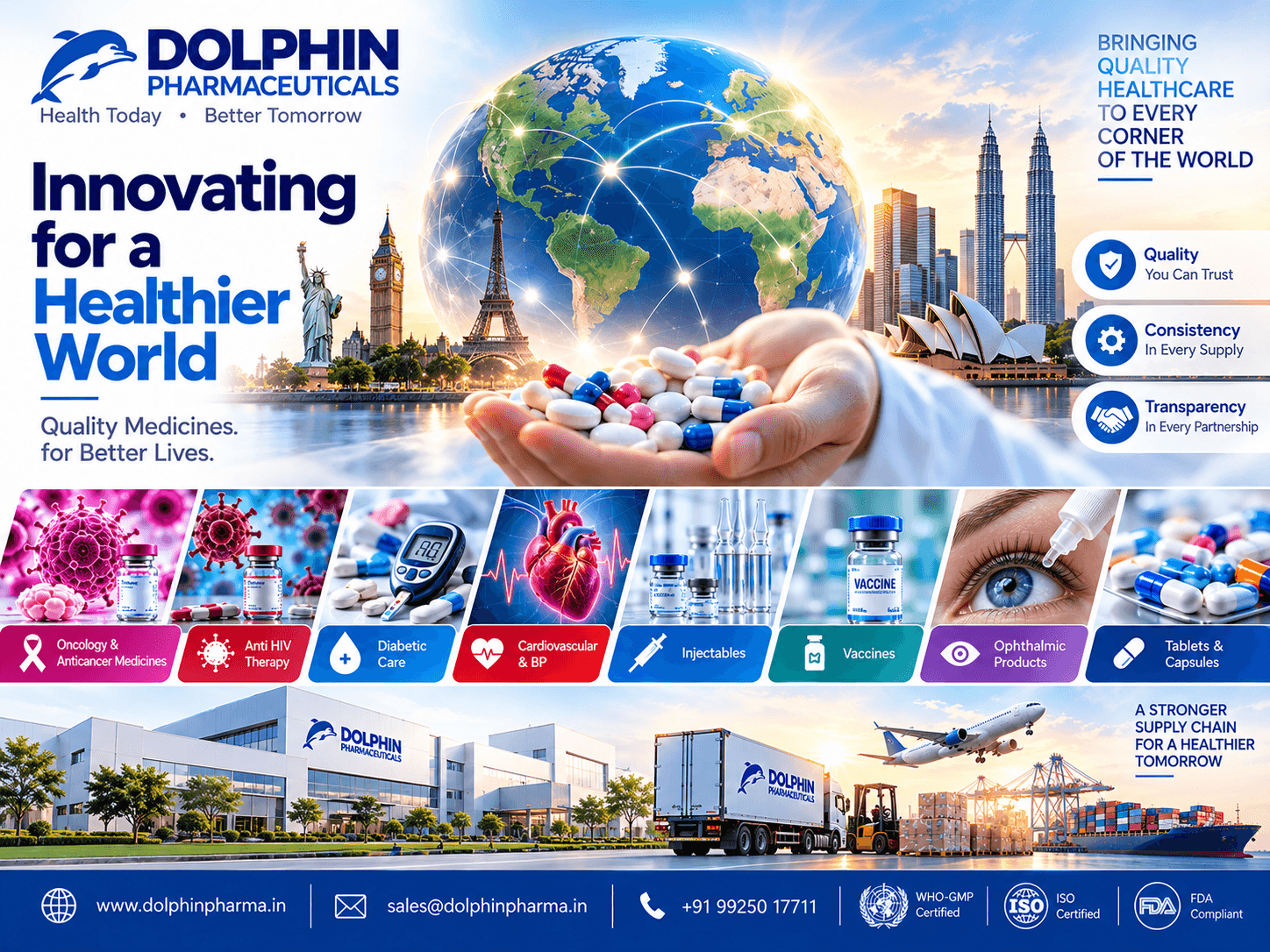
Dolphin Pharmaceuticals, based in Surat, Gujarat, India, provides an online pharmaceutical catalogue that includes selected anti-cancer and oncology products. International buyers can use this portfolio as a starting point for product enquiries and confirm the relevant specifications, availability, documentation, and export eligibility before proceeding.
This guide explains how pharmaceutical importers can select an anti-cancer medicine export partner with a structured, quality-conscious, and buyer-focused approach.
1. Why Choosing the Right Anti-Cancer Medicine Export Partner Matters
Selecting an export partner involves more than identifying a company that can provide a quotation. Buyers need a sourcing relationship that supports accurate information, clear responsibilities, and appropriate product verification.
A suitable partner should be able to clarify its role in the supply chain and explain which product and commercial details have been confirmed.
Important considerations include:
- Product name, strength, dosage form, and packaging
- Actual manufacturer and product origin
- Applicable quality and regulatory documentation
- Product availability and order quantity
- Storage and transportation requirements
- Pricing and payment conditions
- Estimated preparation and delivery timelines
- Communication about changes or delays
These factors help importers evaluate the suitability of a proposed transaction before making a purchasing commitment.
A transparent supplier relationship can also make repeat procurement easier to organise. However, future product availability, prices, and delivery schedules should always be confirmed for each order.
2. Why International Buyers Explore Pharmaceutical Suppliers in India
India has an established pharmaceutical ecosystem that includes manufacturers, finished-formulation suppliers, distributors, and export-oriented businesses.
For international buyers, this ecosystem offers opportunities to explore a range of pharmaceutical products and sourcing arrangements, depending on the specific medicine and destination market.
Access to a broad product portfolio
Importers can investigate different therapeutic categories, including selected oncology medicines. The actual products available depend on the supplier's portfolio, manufacturer arrangements, and current supply conditions.
Different brands and formulations
A medicine may be available under different brand names, strengths, and packaging configurations. Buyers should identify the precise product they need and confirm that the proposed version meets their market's requirements.
Opportunities for international sourcing partnerships
An export-oriented supplier can serve as a point of contact for product enquiries, quotations, documentation discussions, and shipment coordination, depending on the services it provides.
Potential for repeat business
Clear specifications, documented agreements, and timely communication can support more organised procurement relationships over time.
Importers should remember that a product listed by an Indian supplier is not automatically authorised for sale in every destination country. Regulatory eligibility, product availability, and applicable export requirements must be checked individually.
3. Evaluate the Supplier's Role and Manufacturer Information
One of the first steps in selecting an anti-cancer medicine export partner is understanding the company's role in the supply chain.
A business may manufacture medicines directly, distribute products made by other companies, or coordinate sourcing and export arrangements. These roles are different and should be clearly understood.
Before placing an order, buyers should ask:
- Who is the actual manufacturer of the requested medicine?
- What are the exact brand, generic name, strength, and dosage form?
- Can the supplier provide relevant manufacturer information?
- Which product and quality documents are available?
- Who is responsible for preparing the required export documents?
- Which party will coordinate shipment and communicate delivery updates?
The information should be consistent across the quotation, product documentation, and order confirmation.
Buyers should not assume that a supplier manufactures every product appearing in its catalogue. Where a supplier sources products from third-party manufacturers, the manufacturer's identity and the supplier's responsibilities should be established before the transaction proceeds.
This approach helps importers make informed decisions and avoid misunderstandings about product origin or accountability.
4. Assess Product Quality and Documentation
Product quality is a central consideration when sourcing oncology medicines. Importers should review the documentation applicable to the exact product and transaction rather than relying on general assurances.
Depending on the medicine and destination market, the relevant documentation may include:
- Product specifications
- Manufacturer details and applicable quality certifications
- Batch-specific quality documentation
- Certificate of analysis, where applicable
- Product registration or marketing authorisation information
- Required import permits or licences
- Certificates or declarations requested by the importing authority
- Commercial invoice and packing list
- Applicable shipping documentation
Not every document applies to every product. The importer should identify the requirements relevant to its market and verify the authenticity and applicability of the documents received.
A useful review should confirm that product names, strengths, dosage forms, manufacturer information, and other key details match across the available records.
Importers should also establish whether the proposed medicine can legally be imported and distributed in their destination country.
In India, the Central Drugs Standard Control Organisation (CDSCO) publishes guidance concerning certain pharmaceutical export procedures, including procedures for specified unapproved, banned, or new drugs. The relevance of a particular requirement depends on the product and circumstances. Buyers and suppliers should verify the applicable rules before dispatch.
5. Understand Regulatory Compliance in the Destination Market
Pharmaceutical export transactions involve requirements that can differ between countries. A medicine's availability in one market does not automatically establish its registration or import eligibility elsewhere.
Before confirming an order, importers should review the requirements of the destination country's relevant medicines regulator and customs authority.
Product registration and authorisation
Confirm whether the medicine requires local registration, marketing authorisation, or another form of approval.
Import licences and permits
Determine whether the importing business must hold a specific pharmaceutical import licence or product-related permit.
Labelling and packaging
Check whether local regulations specify particular packaging, labelling, language, or product-information requirements.
Product-specific restrictions
Some medicines may be subject to additional controls or documentation requirements. These should be checked individually.
Customs and shipment documentation
Confirm which commercial, regulatory, and transport records are required for import clearance.
Distribution responsibilities
Understand the local requirements governing storage, distribution, traceability, and recordkeeping.
The importer and export partner should agree on who will provide each document and when it must be available. This can reduce avoidable administrative delays and help ensure that the shipment is properly prepared.
6. Reliable Delivery Starts with Proper Planning
Reliable pharmaceutical delivery requires realistic scheduling, clear communication, and coordination between the supplier, shipping provider, and importer.
An export partner should distinguish between a preliminary delivery estimate and a confirmed shipping schedule. Buyers should request updates when important milestones change.
Before confirming an order, discuss the following:
Product availability: Confirm whether the requested quantity has been checked and can be supplied.
Order preparation: Clarify the estimated time required to prepare the order and supporting documentation.
Dispatch schedule: Establish the expected dispatch date once the relevant conditions have been met.
Transit time: Request an estimate based on the proposed shipping method and destination.
Import clearance: Identify the documents and responsibilities required for customs clearance.
Delivery updates: Agree on how shipment progress, delays, and unexpected issues will be communicated.
No supplier should promise an exact delivery date without considering the relevant product, documentation, transport, and customs requirements.
For international buyers, a clearly communicated schedule is more useful than an unrealistic guarantee. A structured delivery plan helps procurement teams manage expectations and coordinate their own responsibilities.
7. Packaging, Storage, and Transportation Requirements
Pharmaceutical products must be handled according to their specific storage and transportation instructions.
Oncology medicines do not all have identical requirements. Some products may need refrigerated transportation, while others have different temperature limits and handling conditions.
Before dispatch, buyers should confirm:
- Required storage temperature
- Packaging and handling instructions
- Shelf-life requirements
- Whether temperature-controlled transport is necessary
- Estimated transit duration
- Shipping and insurance arrangements
- Customs-clearance responsibilities
- Any applicable temperature-monitoring procedures
For products requiring a controlled temperature range, the parties should agree on suitable transport arrangements before the shipment begins.
The supplier and importer should also clarify how delays or unexpected transport conditions will be handled and who is responsible for each stage of the process.
Proper planning can help protect product integrity and reduce avoidable delivery complications.
Importers should never assume that all oncology medicines can be transported using the same method. Product-specific instructions and applicable regulations must guide the arrangements.
8. Compare Prices Without Compromising Procurement Standards
Competitive pricing is important for pharmaceutical importers, but the lowest quotation may not represent the most suitable overall sourcing arrangement.
Buyers should compare quotations using consistent specifications and assess the complete procurement cost.
Consider these factors:
- Product cost: Confirm the exact medicine, brand, strength, dosage form, and pack size.
- Manufacturer: Establish who makes the product and whether the offered version meets the buyer's requirements.
- Order quantity: Clarify minimum order quantities and supply limitations.
- Documentation: Identify which required documents are included and whether additional charges apply.
- Freight and insurance: Confirm shipping costs and responsibilities.
- Lead time: Review the estimated order preparation, dispatch, and transit schedule.
- Payment terms: Ensure that payment conditions are clear and documented.
- Repeat orders: Discuss future planning without assuming that prices or availability will remain unchanged.
A complete quotation enables buyers to compare suppliers more fairly and understand the commercial implications of the proposed transaction.
Quality verification and regulatory compliance should remain essential parts of the decision, not optional considerations based on price.
9. Communication and Transparency Build Long-Term Trust
A strong export partnership depends on clear communication before, during, and after an order.
Importers need accurate information to coordinate internal approvals, documentation, shipping, and inventory planning. Delayed or unclear communication can make these tasks more difficult.
A professional working relationship should include:
- Clear responses to product enquiries
- Accurate written quotations
- Transparent manufacturer information
- Confirmation of applicable documentation
- Realistic delivery estimates
- Timely updates about availability and delays
- Clearly defined responsibilities
- Prompt communication about changes to agreed arrangements
Buyers also have an important role. Providing complete product specifications, destination-market requirements, and realistic quantity forecasts helps the supplier assess the enquiry more accurately.
When both parties communicate openly, the procurement process becomes easier to manage and review.
Long-term trust should be built on verifiable information and consistent business practices rather than unsupported promises.
10. Why Consider Dolphin Pharmaceuticals for Your Sourcing Enquiry?
Dolphin Pharmaceuticals, based in Surat, Gujarat, India, provides an online pharmaceutical catalogue that includes selected anti-cancer and oncology products.
The published catalogue identifies products by details such as generic name, dosage form, packaging, and manufacturer for individual listings. This information can provide international buyers with a starting point for identifying products for further discussion.
Importers interested in exploring the catalogue should prepare a product-specific enquiry that includes the following:
- Required generic name and preferred brand, where applicable.
- Strength, dosage form, and packaging requirements.
- Requested quantity.
- Destination country.
- Relevant registration and documentation requirements.
- Preferred delivery schedule.
The company should be contacted directly to confirm current availability, manufacturer details, pricing, documentation, and export eligibility for the products requested.
A catalogue listing should not be treated as confirmation of immediate stock, regulatory approval in the destination market, or a guaranteed delivery date.
By providing complete information at the enquiry stage, buyers can establish a clearer basis for discussing their procurement requirements.
11. Checklist Before Selecting an Anti-Cancer Medicine Export Partner
Use this checklist when evaluating a potential supplier.
- Verify the supplier's business details and role in the supply chain.
- Confirm the actual manufacturer of each requested product.
- Check the product name, strength, dosage form, and packaging.
- Review applicable product and quality documentation.
- Confirm destination-country registration and import eligibility.
- Clarify order quantity, pricing, and payment conditions.
- Establish realistic preparation and delivery timelines.
- Confirm storage, packaging, and transport requirements.
- Agree on shipping documents and customs responsibilities.
- Keep quotations, approvals, and agreed terms in writing.
This checklist provides a practical starting point for comparing potential partners. Additional checks may be necessary depending on the medicine, destination market, and nature of the transaction.
Frequently Asked Questions
1. How do I choose an anti-cancer medicine export partner in India?
Evaluate the supplier's business information, manufacturer transparency, product-specific documentation, regulatory awareness, pricing, communication, and shipping arrangements. Confirm that the product can legally be supplied to your destination market.
2. What should pharmaceutical importers check before placing an order?
Confirm the exact product, manufacturer, quantity, price, relevant documentation, destination-market eligibility, storage requirements, delivery estimate, and shipping responsibilities.
3. Does Dolphin Pharmaceuticals offer oncology medicines?
Dolphin Pharmaceuticals' published online catalogue includes selected anti-cancer and oncology product listings. International buyers should contact the company directly to confirm current availability, specifications, manufacturer details, and export eligibility.
4. How can I assess the quality of an oncology medicine?
Review applicable product and manufacturer documentation, verify the relevant quality records, and confirm the regulatory requirements for the destination country. The precise checks depend on the medicine and transaction.
5. Can an Indian supplier guarantee delivery to every country?
No universal delivery guarantee is appropriate for all products and destinations. Delivery depends on product availability, documentation, regulatory requirements, shipping arrangements, and customs clearance.
6. Are all anti-cancer medicines approved for international export?
No. Export and import eligibility depend on the medicine, applicable regulations, and the destination market. Importers should confirm the relevant requirements before placing an order.
7. How can I request a quotation from Dolphin Pharmaceuticals?
Prepare a list of the required medicines with their strengths, dosage forms, quantities, destination country, and documentation requirements. Submit the enquiry through the company's official contact channels and confirm the commercial and regulatory details directly.
Conclusion
Choosing the right anti-cancer medicine export partner is an important part of building a dependable pharmaceutical sourcing process. International buyers should assess supplier credibility, manufacturer information, product documentation, regulatory compliance, packaging, delivery planning, and commercial transparency before committing to an order.
India provides a broad pharmaceutical sourcing ecosystem, but successful international procurement depends on evaluating each medicine and destination market individually. A structured approach helps importers make informed decisions and establish clearer expectations with their suppliers.
Dolphin Pharmaceuticals, based in Surat, Gujarat, India, welcomes enquiries from international pharmaceutical importers, distributors, and procurement teams interested in exploring its published product portfolio, including selected oncology medicines.
Looking for an anti-cancer medicine export partner in India? Prepare your product requirements, order quantities, destination country, and documentation needs to begin a product-specific sourcing enquiry with Dolphin Pharmaceuticals.
Product availability, manufacturer details, commercial terms, export eligibility, and delivery timelines must be confirmed for each enquiry and remain subject to applicable requirements.
My Company Name - Dolphin Pharmaceuticals
My Website - https://www.dolphinpharma.in/